Every mathematical discipline goes through three periods of development: the naive, the formal, and the critical. David Hilbert The goal of this book is to explain the principles that made support vector machines (SVMs) a successful modeling and prediction tool for a variety of applications. We try to achieve this by presenting the basic ideas of SVMs together with the latest developments and current research questions in a uni?ed style. In a nutshell, we identify at least three reasons for the success of SVMs: their ability to learn well with only a very small number of free parameters, their robustness against several types of model violations and outliers, and last but not least their computational e?ciency compared with several other methods. Although there are several roots and precursors of SVMs, these methods gained particular momentum during the last 15 years since Vapnik (1995, 1998) published his well-known textbooks on statistical learning theory with aspecialemphasisonsupportvectormachines. Sincethen,the?eldofmachine learninghaswitnessedintenseactivityinthestudyofSVMs,whichhasspread moreandmoretootherdisciplinessuchasstatisticsandmathematics. Thusit seems fair to say that several communities are currently working on support vector machines and on related kernel-based methods. Although there are many interactions between these communities, we think that there is still roomforadditionalfruitfulinteractionandwouldbegladifthistextbookwere found helpful in stimulating further research. Many of the results presented in this book have previously been scattered in the journal literature or are still under review. As a consequence, these results have been accessible only to a relativelysmallnumberofspecialists,sometimesprobablyonlytopeoplefrom one community but not the others.
Every mathematical discipline goes through three periods of development: the naive, the formal, and the critical. David Hilbert The goal of this book is to explain the principles that made support vector machines (SVMs) a successful modeling and prediction tool for a variety of applications. We try to achieve this by presenting the basic ideas of SVMs together with the latest developments and current research questions in a uni?ed style. In a nutshell, we identify at least three reasons for the success of SVMs: their ability to learn well with only a very small number of free parameters, their robustness against several types of model violations and outliers, and last but not least their computational e?ciency compared with several other methods. Although there are several roots and precursors of SVMs, these methods gained particular momentum during the last 15 years since Vapnik (1995, 1998) published his well-known textbooks on statistical learning theory with aspecialemphasisonsupportvectormachines. Sincethen,the?eldofmachine learninghaswitnessedintenseactivityinthestudyofSVMs,whichhasspread moreandmoretootherdisciplinessuchasstatisticsandmathematics. Thusit seems fair to say that several communities are currently working on support vector machines and on related kernel-based methods. Although there are many interactions between these communities, we think that there is still roomforadditionalfruitfulinteractionandwouldbegladifthistextbookwere found helpful in stimulating further research. Many of the results presented in this book have previously been scattered in the journal literature or are still under review. As a consequence, these results have been accessible only to a relativelysmallnumberofspecialists,sometimesprobablyonlytopeoplefrom one community but not the others.
Support vector machines (SVM) have both a solid mathematical background and practical applications. This book focuses on the recent advances and applications of the SVM, such as image processing,...
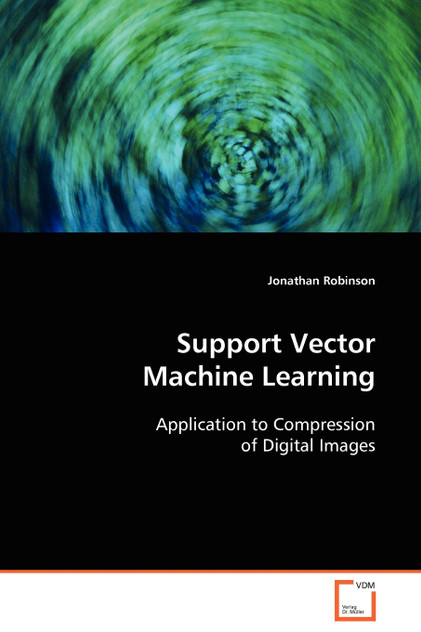
Methods exploring the application of support vector machine learning (SVM) to still image compression are detailed in both the spatial and frequency domains. In particular the sparse properties of...
This book provides a systematic and focused study of the various aspects of twin support vector machines (TWSVM) and related developments for classification and regression. In addition to presenting...
A guide on the use of SVMs in pattern classification, including a rigorous performance comparison of classifiers and regressors. The book presents architectures for multiclass classification and...
Discover your next great read at BookLoop, Australiand online bookstore offering a vast selection of titles across various genres and interests. Whether you're curious about what's trending or searching for graphic novels that captivate, thrilling crime and mystery fiction, or exhilarating action and adventure stories, our curated collections have something for every reader. Delve into imaginative fantasy worlds or explore the realms of science fiction that challenge the boundaries of reality. Fans of contemporary narratives will find compelling stories in our contemporary fiction section. Embark on epic journeys with our fantasy and science fiction titles,
Shop Trending Books and New Releases
Explore our new releases for the most recent additions in romance books, fantasy books, graphic novels, crime and mystery books, science fiction books as well as biographies, cookbooks, self help books, tarot cards, fortunetelling and much more. With titles covering current trends, booktok and bookstagram recommendations, and emerging authors, BookLoop remains your go-to local australian bookstore for buying books online across all book genres.
Shop Best Books By Collection
Stay updated with the literary world by browsing our trending books, featuring the latest bestsellers and critically acclaimed works. Explore titles from popular brands like Minecraft, Pokemon, Star Wars, Bluey, Lonely Planet, ABIA award winners, Peppa Pig, and our specialised collection of ADHD books. At BookLoop, we are committed to providing a diverse and enriching reading experience for all.
Sign In
your cart
Your cart is empty
Menu
Search
PRE-SALES
If you have any questions before making a purchase chat with our online operators to get more information.