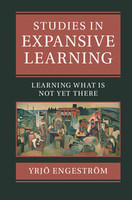
Yrjö Engeström's exciting approach sees expansive learning as the central mechanism of transformation in societal practices and institutions. For researchers and practitioners in education, this book provides a conceptual and practical toolkit for creating and analyzing expansive learning processes with the help of interventions in workplaces, schools and communities. Chapters 1-3 situate the theory of expansive learning in the field of learning science. Chapters 4-8 contain empirical studies of expansive learning in various organizational settings (such as banks, schools and hospitals). In Chapters 9-10, the author looks at new challenges and possibilities arising from rapidly spreading 'wildfire' activities (disaster relief, for example) and from the methodology of formative interventions aimed at triggering and supporting expansive learning. This book provides an integrative account of recent empirical studies and conceptual developments in the theory of expansive learning, and serves as a companion volume to Learning by Expanding.
This book discusses approaches to organizational learning from a materialist point of view. Inspired by research into Police Firearms training, features of expansive learning inform the development...
This book was first published in 1969. This volume includes essays on the development of the Lancashire and Yorkshire railway network; the early Railway Capital Market and tables n expenses, capital...
This work has been selected by scholars as being culturally important, and is part of the knowledge base of civilization as we know it. This work was reproduced from the original artifact, and...
Expansive clay absorb water and swell, and lose water to atmosphere and shrink. Because of this alternate swelling and shrinkage, lightly loaded civil engineering structures are distressed. This has...