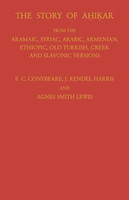
The story of Ahikar has appeared in various forms and numerous languages over the course of the last two and a half millennia. Long known to readers of the Arabian Nights, it was not until the end of the nineteenth century that scholars began to suspect that the legend had semi-biblical origins. Cambridge University Press had already published the first edition of The Story of Ahikar in 1898 when an enlarged and corrected second edition was prompted by the discovery of a series of Aramaic papyrus fragments on the island of Elephantiné, dating from the fifth century before Christ. It is the second edition of The Story of Ahikar, first published in 1913, which is reproduced here. Meticulously assembled, this edition contains the Armenian, Old Turkish, Syriac, and Arabic versions of the story in their original source language with accompanying English translations. Also included are translations of the Slavonic, Ethiopic, and Aramaic versions, as well as fragments of the sayings and parables of Ahikar and the Greek text of the story.
The Story of Aḥiqar, also known as the Words of Aḥiqar, is a story first attested in Imperial Aramaic from the fifth century BCE on papyri from Egypt, that circulated widely in the Middle and Near...
The Words of Ahikar is the oldest surviving Israelite story, with known copies in Aramaic dating back to the 5th century BC. As it has been translated into many languages over the past two and a half...