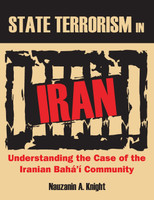
State terrorism, as a concept, has largely been operationalised out of terrorism literature. When a state uses violence systematically against unarmed victims, with the purpose of generating fear and communicating a message to a group beyond the immediate victims, this steps outside the bounds of legitimate use of violence. The Islamic Republic of Iran (IRI) has engaged in such acts of violence against the Bahá'í community in that country. In this study, a working model of state terrorism is devised and the following central research question is addressed: do the strategy and tactics utilized by the IRI and/or its proxies against Iranian Bahá'ís constitute state terrorism?This qualitative study adopts a Mixed Approach Design. Eighteen Iranian Bahá'í and non-Bahá'í emigrants were purposively sampled and interviewed. In-depth interview data was triangulated and validated using structured data sources. Data analysis drew on the systematic-combining approach (Dubois & Gadde, 2002) whereby the original theoretical frame weighed against emergent findings.This exploratory study produces empirical evidence to suggest that Iran is a terrorist state: Iranian Bahá'ís are subjected to acts and/or threats of violence stemming from the state or its surrogates; the responsibility to protect norm is not applied to Bahá'ís; and, the IRI tries to invoke fear in and beyond the Iranian population to isolate and silence Bahá'ís.State terrorism claims many more victims than insurgent terrorism, yet the former concept is seldom mentioned in terrorism studies (Stohl, 2008). The onus is on researchers to identify cases of state terrorists and hold the perpetrators to account at the international level. A special case can be made, based on the empirical evidence, for the creation of an international convention on state terrorism that would hold state governments, like the IRI, responsible for carrying out terroristic acts of violence against segments of their population.
State terrorism, as a concept, has largely been operationalised out of terrorism literature. When a state uses violence systematically against unarmed victims, with the purpose of generating fear and communicating a message to a group beyond the immediate victims, this steps outside the bounds of legitimate use of violence. The Islamic Republic of Iran (IRI) has engaged in such acts of violence against the Bahá'í community in that country. In this study, a working model of state terrorism is devised and the following central research question is addressed: do the strategy and tactics utilized by the IRI and/or its proxies against Iranian Bahá'ís constitute state terrorism?This qualitative study adopts a Mixed Approach Design. Eighteen Iranian Bahá'í and non-Bahá'í emigrants were purposively sampled and interviewed. In-depth interview data was triangulated and validated using structured data sources. Data analysis drew on the systematic-combining approach (Dubois & Gadde, 2002) whereby the original theoretical frame weighed against emergent findings.This exploratory study produces empirical evidence to suggest that Iran is a terrorist state: Iranian Bahá'ís are subjected to acts and/or threats of violence stemming from the state or its surrogates; the responsibility to protect norm is not applied to Bahá'ís; and, the IRI tries to invoke fear in and beyond the Iranian population to isolate and silence Bahá'ís.State terrorism claims many more victims than insurgent terrorism, yet the former concept is seldom mentioned in terrorism studies (Stohl, 2008). The onus is on researchers to identify cases of state terrorists and hold the perpetrators to account at the international level. A special case can be made, based on the empirical evidence, for the creation of an international convention on state terrorism that would hold state governments, like the IRI, responsible for carrying out terroristic acts of violence against segments of their population.
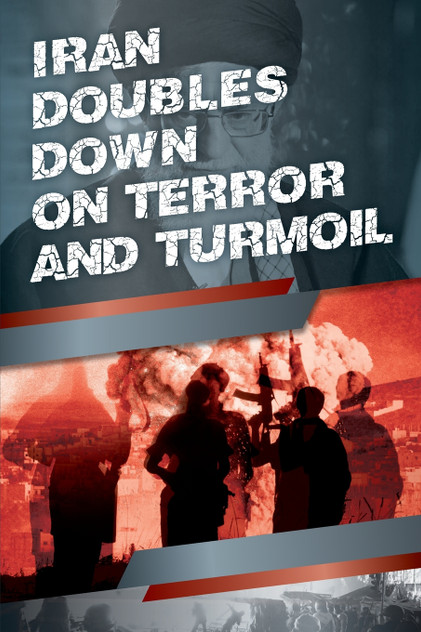
This book examines the motivation behind the regime’s political and economic strategy by considering three areas: terrorism including in Europe and the United States, incitement of regional...
A comparative analysis of one of the most devastating social problems of the contemporary world. Focuses not only on acts of terrorism by terrorists, but with their portrayal and manipulation by...
Discover your next great read at BookLoop, Australiand online bookstore offering a vast selection of titles across various genres and interests. Whether you're curious about what's trending or searching for graphic novels that captivate, thrilling crime and mystery fiction, or exhilarating action and adventure stories, our curated collections have something for every reader. Delve into imaginative fantasy worlds or explore the realms of science fiction that challenge the boundaries of reality. Fans of contemporary narratives will find compelling stories in our contemporary fiction section. Embark on epic journeys with our fantasy and science fiction titles,
Shop Trending Books and New Releases
Explore our new releases for the most recent additions in romance books, fantasy books, graphic novels, crime and mystery books, science fiction books as well as biographies, cookbooks, self help books, tarot cards, fortunetelling and much more. With titles covering current trends, booktok and bookstagram recommendations, and emerging authors, BookLoop remains your go-to local australian bookstore for buying books online across all book genres.
Shop Best Books By Collection
Stay updated with the literary world by browsing our trending books, featuring the latest bestsellers and critically acclaimed works. Explore titles from popular brands like Minecraft, Pokemon, Star Wars, Bluey, Lonely Planet, ABIA award winners, Peppa Pig, and our specialised collection of ADHD books. At BookLoop, we are committed to providing a diverse and enriching reading experience for all.
Sign In
your cart
Your cart is empty
Menu
Search
PRE-SALES
If you have any questions before making a purchase chat with our online operators to get more information.