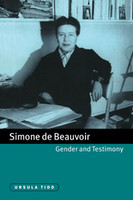
This is a full-length study exploring Simone de Beauvoir's autobiographical and biographical writings in the context of ideas on selfhood formulated in Le deuxième sexe and her other philosophical essays of the 1940s. Drawing on more recent work in autobiographical studies and working within a broadly Foucauldian framework, Ursula Tidd offers a detailed analysis of Beauvoir's auto/biographical strategy as a woman writer seeking to write herself into the male-constructed autobiographical canon. Tidd first analyses Beauvoir's notions of selfhood in her philosophical essays, and then discusses her four autobiographical and two biographical volumes, along with some of her unpublished diaries, in an attempt to explore notions of selectivity, and the politics of truth-production and reception. The study concludes that Beauvoir's vast auto/biographical project, situated in specific personal and historical contexts, can be read as shaped by a testimonial obligation rooted in a productive consciousness of the Other.
Since her death in 1986 and the publication of her letters and diaries in 1990, interest in the philosophy of Simone de Beauvoir has never been greater. In this engaging and timely volume, Margaret A...