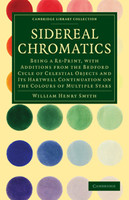
Admiral William Henry Smyth's Sidereal Chromatics (1864) represents a landmark achievement in nineteenth-century astronomy, offering the most precise observations of the colours of double stars yet recorded. An expansion upon his well-known Bedford Cycle of Celestial Objects, which garnered a gold medal from the Royal Astronomical Society, Sidereal Chromatics provides both a theory concerning the source of double-star colours and a method for determining their most exact description. Detailed charts compare Smyth's measurements of more than one hundred double stars with his own previously published observations and those of his fellow astronomer, Father Benedetto Sestini. This edition also includes Smyth's famous colour chart, an attempt to standardise the process of identifying double-star colours. Sidereal Chromatics ends with Smyth's plea to amateur astronomers to continue the effort of charting the heavens, aided by improved telescopes and works such as his, 'trustworthy treatises available to all men'.
This monthly publication covers a wide range of topics in astronomy, including new discoveries, cutting-edge research, and astronomical events to watch out for. Written by experts in the field, it...
Have you ever wondered about the similarity between the seven named musical notes and the number of days in a week? Have you ever contemplated the potential parallels between the twelve months of the...
This volume contains a wealth of information and explicit calculations for using the sidereal zodiac. After introducing the sidereal technique the authors continue with the method of conversion from...
This work has been selected by scholars as being culturally important, and is part of the knowledge base of civilization as we know it.This work is in the "public domain in the United States of...