Trending Bestseller

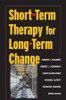
Short-term Therapy for Long-Term Change

Michael Alpert MD

No reviews yet Write a Review
Paperback / softback
08-January-2010
RRP: $49.95
$47.00
Ships in 3-5 business days
Hurry up! Current stock:
Can the effects of early childhood traumas—traumas that may have seemed small at the time but that have affected personality development—be overcome in short-term therapy? Here, leaders in the field of short-term therapy present a definitive statement on state-of-the-art intensive dynamic short-term psychotherapy.
While they have approached these questions from different perspectives, the renowned practitioners in this book note points of contact and overlap among their ideas about the underlying causes of depression, maladjustment, marital discord, character pathology, and posttraumatic stress disorders. Each outlines the precise methods he or she uses with patients to create emotional growth and reintegration, illustrating these with cases and transcripts. Their methods can be proven scientifically valid, taught to others, and reliably reproduced by effectively trained psychotherapists with a wide variety of patients.
Readers will find variations on the theme of short-term therapy for long-term change. Habib Davanloo was a colleague of Malan’s and has influenced Neborsky, Alpert, and McCullough. While Neborsky has devoted himself to refining and presenting clearly Davanloo’s theory and method, Alpert has developed a method of accelerated empathic treatment and McCullough has designed an anxiety-regulating therapy that is the subject of several research studies. Solomon has applied dynamic theories to treatment of intimate relationships. Shapiro, using EMDR, approaches Big-T and small-t traumas in what seems initially a quite different way but is shown ultimately to have many similarities to short-term dynamic psychotherapy.
With this basis in research and clinical practice, the theories and methods presented here have the potential to revolutionize psychodynamic psychotherapy. Is it possible to effect deep, lasting, meaningful psychological change in a short period of time?

This product hasn't received any reviews yet. Be the first to review this product!

RRP: $49.95
$47.00
Ships in 3-5 business days
Hurry up! Current stock:

Short-term Therapy for Long-Term Change

RRP: $49.95
$47.00

Description

Can the effects of early childhood traumas—traumas that may have seemed small at the time but that have affected personality development—be overcome in short-term therapy? Here, leaders in the field of short-term therapy present a definitive statement on state-of-the-art intensive dynamic short-term psychotherapy.
While they have approached these questions from different perspectives, the renowned practitioners in this book note points of contact and overlap among their ideas about the underlying causes of depression, maladjustment, marital discord, character pathology, and posttraumatic stress disorders. Each outlines the precise methods he or she uses with patients to create emotional growth and reintegration, illustrating these with cases and transcripts. Their methods can be proven scientifically valid, taught to others, and reliably reproduced by effectively trained psychotherapists with a wide variety of patients.
Readers will find variations on the theme of short-term therapy for long-term change. Habib Davanloo was a colleague of Malan’s and has influenced Neborsky, Alpert, and McCullough. While Neborsky has devoted himself to refining and presenting clearly Davanloo’s theory and method, Alpert has developed a method of accelerated empathic treatment and McCullough has designed an anxiety-regulating therapy that is the subject of several research studies. Solomon has applied dynamic theories to treatment of intimate relationships. Shapiro, using EMDR, approaches Big-T and small-t traumas in what seems initially a quite different way but is shown ultimately to have many similarities to short-term dynamic psychotherapy.
With this basis in research and clinical practice, the theories and methods presented here have the potential to revolutionize psychodynamic psychotherapy. Is it possible to effect deep, lasting, meaningful psychological change in a short period of time?

Customers Also Viewed