
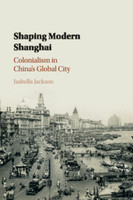
Shaping Modern Shanghai provides a new understanding of colonialism in China through a fresh examination of Shanghai's International Settlement. This was the site of key developments of the Republican period: economic growth, rising Chinese nationalism and Sino-Japanese conflict. Managed by the Shanghai Municipal Council (1854-1943), the International Settlement was beyond the control of the Chinese and foreign imperial governments. Jackson defines Shanghai's unique, hybrid form of colonial urban governance as transnational colonialism. The Council was both colonial in its structures and subject to colonial influence, especially from the British empire, yet autonomous in its activities and transnational in its personnel. This is the first in-depth study of how this unique body functioned on the local, national and international stages, revealing the Council's impact on the daily lives of the city's residents and its contribution to the conflicts of the period, with implications for the fields of modern Chinese and colonial history.
By mapping the city's native spaces of leisure and everyday life, this book reconstructs the spatial, material, and gender modernity of nineteenth-century Shanghai, giving the reader a window into...
A comprehensive history of Shanghai banking and capital markets from 1842 to 1952, detailing the non-financial elements that have contributed to the revolutionary social and financial changes since...
Originally published in 1987, The Shaping of Modern Psychology presents a systematic survey of the development of psychology from the dawn of civilization to the late 1980s. Psychology as we find it...