Trending Bestseller

Sensing Disaster

Matthew Lauer

No reviews yet Write a Review
Hardback
27-June-2023
$200.00
Ships in 3-5 business days
Hurry up! Current stock:
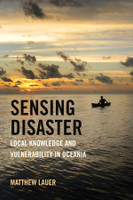
In 2007, a three-story-high tsunami slammed the small island of Simbo in the western Solomon Islands. Drawing on over ten years of research, Matthew Lauer provides a vivid and intimate account of this calamitous event and the tumultuous recovery process. His stimulating analysis surveys the unpredictable entanglements of the powerful waves with colonization, capitalism, human-animal communication, spirit beings, ancestral territory, and technoscientific expertise that shaped the disaster’s outcomes.
Although the Simbo people had never experienced another tsunami in their lifetimes, nearly everyone fled to safety before the destructive waves hit. To understand their astonishing response, Lauer argues that we need to rethink popular and scholarly portrayals of indigenous knowledge to avert epistemic imperialism and improve disaster preparedness strategies. In an increasingly disaster-prone era of ecological crises, this provocative book brings new possibilities into view for understanding the causes and consequences of calamity, the unintended effects of humanitarian recovery and mitigation efforts, and the nature of local knowledge.

This product hasn't received any reviews yet. Be the first to review this product!

$200.00
Ships in 3-5 business days
Hurry up! Current stock:

Sensing Disaster

$200.00

Description

In 2007, a three-story-high tsunami slammed the small island of Simbo in the western Solomon Islands. Drawing on over ten years of research, Matthew Lauer provides a vivid and intimate account of this calamitous event and the tumultuous recovery process. His stimulating analysis surveys the unpredictable entanglements of the powerful waves with colonization, capitalism, human-animal communication, spirit beings, ancestral territory, and technoscientific expertise that shaped the disaster’s outcomes.
Although the Simbo people had never experienced another tsunami in their lifetimes, nearly everyone fled to safety before the destructive waves hit. To understand their astonishing response, Lauer argues that we need to rethink popular and scholarly portrayals of indigenous knowledge to avert epistemic imperialism and improve disaster preparedness strategies. In an increasingly disaster-prone era of ecological crises, this provocative book brings new possibilities into view for understanding the causes and consequences of calamity, the unintended effects of humanitarian recovery and mitigation efforts, and the nature of local knowledge.
Customers Also Viewed