
Trending Bestseller

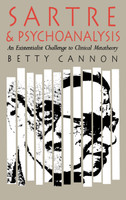
Sartre and Psychoanalysis

An Existentialist Challenge to Clinical Metatheory

No reviews yet Write a Review
Hardback
01 January 1991
$81.68
Ships in 3-5 business days
Hurry up! Current stock:
Betty Cannon is the first to explore the implications of Sartrean philosophy for the Freudian psychoanalytic tradition. Drawing upon Sartre's work as well as her own experiences as a practicing therapist, she shows that Sartre was a "fellow traveler" who appreciated Freud's psychoanalytic achievements but rebelled against the determinism of his metatheory. The mind, Sartre argued, cannot be reduced to a collection of drives and structures, nor is it enslaved to its past as Freud's work suggested. Sartre advocated an existentialist psychoanalysis based on human freedom and the self's ability to reshape its own meaning and value. Through the Sartrean approach Cannon offers a resolution to the crisis in psychoanalytic metatheory created by the current emphasis on relational needs. By comparing Sartre with Freud and influential post-Freudians like Melanie Klein, Otto Kernber, Margaret Mahler, D.W. Winnicott, Heinz Kohut, Harry Stack Sullivan, and Jacques Lacan, she demonstrates why the Sartrean model transcends the limitations of traditional Freudian metatheory. In the process, she adds a new dimension to our understanding of Sartre and his place in twentieth-century philosophy.

You Can Find This Book In

    Book Details
    ISBN-13
    9780700604456
    Author
    Betty Cannon
    Publisher
    University Press of Kansas
    Published
    01 January 1991
    Format
    Hardback

    This product hasn't received any reviews yet. Be the first to review this product!

    $81.68
    Ships in 3-5 business days
    Hurry up! Current stock:

    Sartre and Psychoanalysis

    $81.68

    Description

    Betty Cannon is the first to explore the implications of Sartrean philosophy for the Freudian psychoanalytic tradition. Drawing upon Sartre's work as well as her own experiences as a practicing therapist, she shows that Sartre was a "fellow traveler" who appreciated Freud's psychoanalytic achievements but rebelled against the determinism of his metatheory. The mind, Sartre argued, cannot be reduced to a collection of drives and structures, nor is it enslaved to its past as Freud's work suggested. Sartre advocated an existentialist psychoanalysis based on human freedom and the self's ability to reshape its own meaning and value. Through the Sartrean approach Cannon offers a resolution to the crisis in psychoanalytic metatheory created by the current emphasis on relational needs. By comparing Sartre with Freud and influential post-Freudians like Melanie Klein, Otto Kernber, Margaret Mahler, D.W. Winnicott, Heinz Kohut, Harry Stack Sullivan, and Jacques Lacan, she demonstrates why the Sartrean model transcends the limitations of traditional Freudian metatheory. In the process, she adds a new dimension to our understanding of Sartre and his place in twentieth-century philosophy.

    You Can Find This Book In

      This Book Is Categorised As