
Trending Bestseller

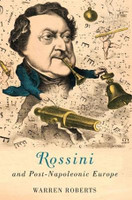
Rossini and Post-Napoleonic Europe
No reviews yet Write a Review
Hardback
254 Pages
$148.54
Ships in 3-5 business days
Hurry up! Current stock:

Warren Roberts has discovered a Rossini that others have not seen, a composer who commented ironically and satirically on religion and politics in Post-Napoleonic Europe. This book examines Rossini within the context of his own time, one of Napoleonic domination of Italy, restoration of the Bourbon monarchy in Naples in 1815, and the 1830 Revolution in Paris. Using the techniques of the historian,and reading librettos as texts, the author analyzes the five operas treated in detail in the book (Il barbiere di Siviglia, Cenerentola, La gazza ladra, Matilde di Shabran, and Il viaggio a Reims) as responses, each in its own way, to the history that the composer experienced. Roberts shows that Rossini made probing commentaries on politics and religion in a time of reaction and revolution, and that the composer was well-informed on post-Napoleonic politics. Rossini's comic writing served very serious purposes, exposing the problems and complications of an age that he observed with striking clarity. Warren Roberts is Professor Emeritusof History at the University at Albany, SUNY, and has published extensively on eighteenth-century French culture.

"
Book Details
ISBN-13
9781580465304
Author
Warren E. Warren E. Roberts
Format
Hardback
Pages
254

This product hasn't received any reviews yet. Be the first to review this product!

$148.54
Ships in 3-5 business days
Hurry up! Current stock:

Rossini and Post-Napoleonic Europe

$148.54

Description

Warren Roberts has discovered a Rossini that others have not seen, a composer who commented ironically and satirically on religion and politics in Post-Napoleonic Europe. This book examines Rossini within the context of his own time, one of Napoleonic domination of Italy, restoration of the Bourbon monarchy in Naples in 1815, and the 1830 Revolution in Paris. Using the techniques of the historian,and reading librettos as texts, the author analyzes the five operas treated in detail in the book (Il barbiere di Siviglia, Cenerentola, La gazza ladra, Matilde di Shabran, and Il viaggio a Reims) as responses, each in its own way, to the history that the composer experienced. Roberts shows that Rossini made probing commentaries on politics and religion in a time of reaction and revolution, and that the composer was well-informed on post-Napoleonic politics. Rossini's comic writing served very serious purposes, exposing the problems and complications of an age that he observed with striking clarity. Warren Roberts is Professor Emeritusof History at the University at Albany, SUNY, and has published extensively on eighteenth-century French culture.

"