Trending Bestseller

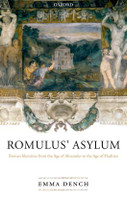
Romulus' Asylum

No reviews yet Write a Review
Who did the Romans think they were? They were a people scattered round the ancient Mediterranean world, yet they imagined a common identity for themselves, particularly through shared myths and history. This book shows how ancient means of constructing identity compare with modern means, especially that of `race'.
Hardback
01-June-2005
RRP: $501.00
$397.00
Ships in 5–7 business days
Hurry up! Current stock:
Modern treatments of Rome have projected in highly emotive terms the perceived problems, or the aspirations, of the present: 'race-mixture' has been blamed for the collapse of the Roman empire; more recently, Rome and Roman society have been depicted as 'multicultural'. Moving beyond these and beyond more traditional, juridical approaches to Roman identity, Emma Dench focuses on ancient modes of thinking about selves and relationships with other peoples, including descent-myths, history, and ethnographies. She explores the relative importance of sometimes closely interconnected categories of blood descent, language, culture and clothes, and territoriality. Rome's creation of a distinctive imperial shape is understood in the context of the broader ancient Mediterranean world within which the Romans self-consciously situated themselves, and whose modes of thought they appropriated and transformed.

This product hasn't received any reviews yet. Be the first to review this product!

RRP: $501.00
$397.00
Ships in 5–7 business days
Hurry up! Current stock:

Romulus' Asylum

RRP: $501.00
$397.00

Description

Modern treatments of Rome have projected in highly emotive terms the perceived problems, or the aspirations, of the present: 'race-mixture' has been blamed for the collapse of the Roman empire; more recently, Rome and Roman society have been depicted as 'multicultural'. Moving beyond these and beyond more traditional, juridical approaches to Roman identity, Emma Dench focuses on ancient modes of thinking about selves and relationships with other peoples, including descent-myths, history, and ethnographies. She explores the relative importance of sometimes closely interconnected categories of blood descent, language, culture and clothes, and territoriality. Rome's creation of a distinctive imperial shape is understood in the context of the broader ancient Mediterranean world within which the Romans self-consciously situated themselves, and whose modes of thought they appropriated and transformed.
Customers Also Viewed