1 Capabilities and potential of robotics.- 1.1 Robotic technology and capability.- 1.2 Current robotic devices in use in the food sector.- 1.3 Production of primal cuts from carcasses.- 1.3.1 Manual methods for pig and sheep butchery.- 1.3.2 Primal cuts and the need for automation.- 1.3.3 Robotics and vision integration for the production of primal cuts.- 1.3.4 Automatic handling and constraints in manipulation.- 1.3.5 System trials and successes in automated production of primal cuts.- 1.4 Concluding remarks.- References.- 2 Fish processing using computer vision and robots.- 2.1 Introduction.- 2.2 Current procedures in fish processing.- 2.2.1 Work procedure.- 2.2.2. Production control.- 2.3 Implementation aspects.- 2.3.1 Fish characteristics.- 2.3.2 Image acquisition.- 2.3.3 Computer vision algorithms.- 2.3.4 Robotic manipulator.- 2.3.5 End-effectors.- 2.3.6 The environment.- 2.4 Robotic and vision systems in use for fish processing.- 2.4.1 Vision systems.- 2.4.2 Robots.- 2.5 New applications and technological needs.- 2.5.1 Handling.- 2.5.2 Sorting.- 2.5.3. Inspection.- 2.6 Concluding remarks.- References.- 3 Robotics and the poultry processing industry.- 3.1 Introduction.- 3.2 The typical poultry processing operation.- 3.3 Issues impacting the potential for robotics in poultry processing.- 3.4 Evolution of automation in processing plants.- 3.5 Traypack workcell.- 3.5.1 Manual operation.- 3.5.2 Cell design.- 3.5.3 System programming/path planning.- 3.5.4 End-effector design.- 3.5.5 Discussion.- 3.6 Parts transfer/loading workcell.- 3.6.1 Current operation.- 3.6.2 Workcell design.- 3.6.3 Gripper design.- 3.6.4 Software design/programming.- 3.6.5 Cycle time optimization.- 3.6.6 Grip reliability.- 3.6.7 Discussion.- 3.7 Vision for quality and machine control.- 3.7.1 Introduction.- 3.7.2 Grey-scale analysis.- 3.7.3 Color analysis.- 3.7.4 Machine guidance.- 3.7.5 Discussion.- 3.8 Future directions and development needs.- References.- 4 Robotic packaging of poultry products.- 4.1 Introduction.- 4.2 The end-effector.- 4.2.1 Parallel action base.- 4.2.2 Finger assemblies.- 4.3 The vision system.- 4.3.1 Object recognition.- 4.3.2 Recognition algorithms.- 4.3.3 Comparison of recognition algorithms.- 4.4 Vision system software.- 4.4.1 Training and recognition.- 4.4.2 Sensitivity.- 4.4.3 Grey-scale resolution.- 4.4.4 Threshold setting.- 4.4.5 Bruise detection.- 4.5 Robot system integration.- 4.6 Poultry weight saving simulation.- 4.6.1 The product type simulated.- 4.6.2 FWFP production without a picking strategy.- 4.6.3 FWFP production using a picking strategy.- 4.6.4 Results of the simulation programs.- 4.6.5 Refinement of the picking strategy.- 4.7 Conclusions.- Acknowledgements.- References.- 5 Robotic cutting of beef and deboning.- 5.1 Introduction.- 5.2 Robotic butchery system requirements.- 5.3 Butchery system operation scheme.- 5.3.1 Forequarter clamping.- 5.3.2 Cutting scheme.- 5.3.3 Forequarter database (FQDB).- 5.3.4 Cutting devices.- 5.3.5 Cutting trials.- 5.3.6 Cutting control algorithm.- 5.4 Further work.- 5.5 Conclusions.- Acknowledgements.- Appendix 1: Cutting scheme definition.- Appendix 2: Forequarter measurement points.- References.- 6 Automation in the production of pork meat.- 6.1 Processes in pig carcass production and handling.- 6.1.1 Handling and stunning.- 6.1.2 Sticking, bleeding and surface treatment.- 6.1.3 Evisceration and trimming.- 6.1.4 Meat inspection and carcass classification.- 6.1.5 Chilling, selection and further processing.- 6.2 Current trends in mechanisation and automation in the pork industry.- 6.2.1 Single process automation.- 6.2.2 Transport and handling automation.- 6.2.3 Integrated systems.- 6.3 Potential for improving quality by automation.- 6.3.1 Welfare and meat quality.- 6.3.2 Hygiene and process control.- 6.3.3 Potential for classification technology.- 6.4 Automatic grading system and description of a current system in use.- 6.4.1 Measurement of anatomical dimensions.- 6.4.2 Probe posit...
1 Capabilities and potential of robotics.- 1.1 Robotic technology and capability.- 1.2 Current robotic devices in use in the food sector.- 1.3 Production of primal cuts from carcasses.- 1.3.1 Manual methods for pig and sheep butchery.- 1.3.2 Primal cuts and the need for automation.- 1.3.3 Robotics and vision integration for the production of primal cuts.- 1.3.4 Automatic handling and constraints in manipulation.- 1.3.5 System trials and successes in automated production of primal cuts.- 1.4 Concluding remarks.- References.- 2 Fish processing using computer vision and robots.- 2.1 Introduction.- 2.2 Current procedures in fish processing.- 2.2.1 Work procedure.- 2.2.2. Production control.- 2.3 Implementation aspects.- 2.3.1 Fish characteristics.- 2.3.2 Image acquisition.- 2.3.3 Computer vision algorithms.- 2.3.4 Robotic manipulator.- 2.3.5 End-effectors.- 2.3.6 The environment.- 2.4 Robotic and vision systems in use for fish processing.- 2.4.1 Vision systems.- 2.4.2 Robots.- 2.5 New applications and technological needs.- 2.5.1 Handling.- 2.5.2 Sorting.- 2.5.3. Inspection.- 2.6 Concluding remarks.- References.- 3 Robotics and the poultry processing industry.- 3.1 Introduction.- 3.2 The typical poultry processing operation.- 3.3 Issues impacting the potential for robotics in poultry processing.- 3.4 Evolution of automation in processing plants.- 3.5 Traypack workcell.- 3.5.1 Manual operation.- 3.5.2 Cell design.- 3.5.3 System programming/path planning.- 3.5.4 End-effector design.- 3.5.5 Discussion.- 3.6 Parts transfer/loading workcell.- 3.6.1 Current operation.- 3.6.2 Workcell design.- 3.6.3 Gripper design.- 3.6.4 Software design/programming.- 3.6.5 Cycle time optimization.- 3.6.6 Grip reliability.- 3.6.7 Discussion.- 3.7 Vision for quality and machine control.- 3.7.1 Introduction.- 3.7.2 Grey-scale analysis.- 3.7.3 Color analysis.- 3.7.4 Machine guidance.- 3.7.5 Discussion.- 3.8 Future directions and development needs.- References.- 4 Robotic packaging of poultry products.- 4.1 Introduction.- 4.2 The end-effector.- 4.2.1 Parallel action base.- 4.2.2 Finger assemblies.- 4.3 The vision system.- 4.3.1 Object recognition.- 4.3.2 Recognition algorithms.- 4.3.3 Comparison of recognition algorithms.- 4.4 Vision system software.- 4.4.1 Training and recognition.- 4.4.2 Sensitivity.- 4.4.3 Grey-scale resolution.- 4.4.4 Threshold setting.- 4.4.5 Bruise detection.- 4.5 Robot system integration.- 4.6 Poultry weight saving simulation.- 4.6.1 The product type simulated.- 4.6.2 FWFP production without a picking strategy.- 4.6.3 FWFP production using a picking strategy.- 4.6.4 Results of the simulation programs.- 4.6.5 Refinement of the picking strategy.- 4.7 Conclusions.- Acknowledgements.- References.- 5 Robotic cutting of beef and deboning.- 5.1 Introduction.- 5.2 Robotic butchery system requirements.- 5.3 Butchery system operation scheme.- 5.3.1 Forequarter clamping.- 5.3.2 Cutting scheme.- 5.3.3 Forequarter database (FQDB).- 5.3.4 Cutting devices.- 5.3.5 Cutting trials.- 5.3.6 Cutting control algorithm.- 5.4 Further work.- 5.5 Conclusions.- Acknowledgements.- Appendix 1: Cutting scheme definition.- Appendix 2: Forequarter measurement points.- References.- 6 Automation in the production of pork meat.- 6.1 Processes in pig carcass production and handling.- 6.1.1 Handling and stunning.- 6.1.2 Sticking, bleeding and surface treatment.- 6.1.3 Evisceration and trimming.- 6.1.4 Meat inspection and carcass classification.- 6.1.5 Chilling, selection and further processing.- 6.2 Current trends in mechanisation and automation in the pork industry.- 6.2.1 Single process automation.- 6.2.2 Transport and handling automation.- 6.2.3 Integrated systems.- 6.3 Potential for improving quality by automation.- 6.3.1 Welfare and meat quality.- 6.3.2 Hygiene and process control.- 6.3.3 Potential for classification technology.- 6.4 Automatic grading system and description of a current system in use.- 6.4.1 Measurement of anatomical dimensions.- 6.4.2 Probe posit...
1 The origin and concept of HACCP.- 1.1 Introduction.- 1.2 Development of the HACCP concept.- 1.2.1 HACCP - A new approach.- 1.2.2 HACCP - A preventative system.- 1.3 Acceptance of HACCP by the food...
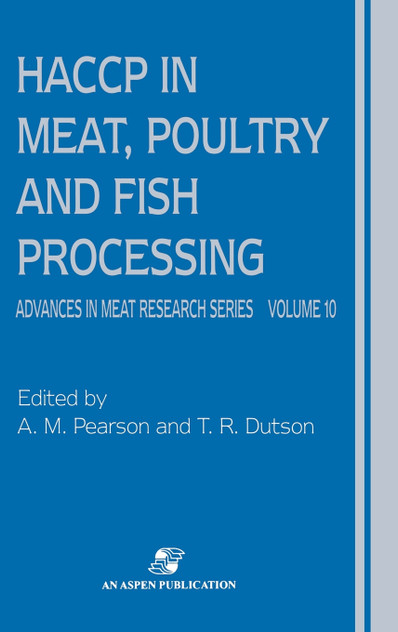
Since its development by The Pillsbury Company as part of the US space program, the HACCP (hazard analysis critical control point) system has become the most important technique for the...
The central theme for this volume was chosen since consumers have great interest in purchasing low fat, low salt and reduced cholesterol meat, poultry and fish products. As in past volumes, experts...
Discover your next great read at BookLoop, Australiand online bookstore offering a vast selection of titles across various genres and interests. Whether you're curious about what's trending or searching for graphic novels that captivate, thrilling crime and mystery fiction, or exhilarating action and adventure stories, our curated collections have something for every reader. Delve into imaginative fantasy worlds or explore the realms of science fiction that challenge the boundaries of reality. Fans of contemporary narratives will find compelling stories in our contemporary fiction section. Embark on epic journeys with our fantasy and science fiction titles,
Shop Trending Books and New Releases
Explore our new releases for the most recent additions in romance books, fantasy books, graphic novels, crime and mystery books, science fiction books as well as biographies, cookbooks, self help books, tarot cards, fortunetelling and much more. With titles covering current trends, booktok and bookstagram recommendations, and emerging authors, BookLoop remains your go-to local australian bookstore for buying books online across all book genres.
Shop Best Books By Collection
Stay updated with the literary world by browsing our trending books, featuring the latest bestsellers and critically acclaimed works. Explore titles from popular brands like Minecraft, Pokemon, Star Wars, Bluey, Lonely Planet, ABIA award winners, Peppa Pig, and our specialised collection of ADHD books. At BookLoop, we are committed to providing a diverse and enriching reading experience for all.
Sign In
your cart
Your cart is empty
Menu
Search
PRE-SALES
If you have any questions before making a purchase chat with our online operators to get more information.