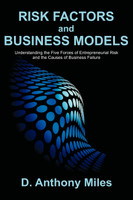
One of the primary concerns in a small business is the problem of risk. Many who begin the start-up process terminate it in less than one year. Of those that survive, many are unable to achieve sustained growth and profits. Small-to-medium business enterprises (SME) have a 50% to 90% chance of failure within the first five years. While there are measures of personal risk behavior of entrepreneurs, the literature contains no measure of risk orientation for the enterprise.The purpose of this study was to develop and validate a researcher-designed instrument to measure the critical forces of business risk. The 37-item Entrepreneurial Risk Assessment Scale (ERAS) was developed from key theoretical concepts grounded in economics, marketing, management, finance, and entrepreneurship literature. It was developed and finalized through a process of reviewing literature, subject matter expert panels' review, and a pilot test. The a priori assumption of the ERAS constructs were (a) personal characteristics, (b) intangible operations, (c) enterprise operations, (d) market climate, and (e) business environment.This study utilized a quantitative methodology to establish construct, content, and criterion validity using Bryant's (2000) framework found in Reading and Understanding More Multivariate Statistics edited by Grimm and Yarnold (2000). A sample (N = 276) was taken from an urban/suburban area in South Texas. A principal axis factoring (PAF) analysis was used to establish construct validity; a principle component analysis (PCA) was used to establish content validity; and a logistic regression was used to establish criterion validity. Reliability was assessed within the efforts to establish content validity. What emerged from both the factor analyses were five new factors of entrepreneurial risk that were different from the a priori assumptions and thus renamed: (a) customer and resources, (b) security, (c) operations, (d) external pressures, and (e) other/alternate factors. The results of the PAF and PCA provided strong support for the content and construct validity of the ERAS instrument. In the assessment of criterion validity, the logistic regression analysis showed the endogenous factors, (a) customer and resources, and (c) operations reliably predicted risk behavior of both nascent and incumbent SMEs.
One of the primary concerns in a small business is the problem of risk. Many who begin the start-up process terminate it in less than one year. Of those that survive, many are unable to achieve sustained growth and profits. Small-to-medium business enterprises (SME) have a 50% to 90% chance of failure within the first five years. While there are measures of personal risk behavior of entrepreneurs, the literature contains no measure of risk orientation for the enterprise.The purpose of this study was to develop and validate a researcher-designed instrument to measure the critical forces of business risk. The 37-item Entrepreneurial Risk Assessment Scale (ERAS) was developed from key theoretical concepts grounded in economics, marketing, management, finance, and entrepreneurship literature. It was developed and finalized through a process of reviewing literature, subject matter expert panels' review, and a pilot test. The a priori assumption of the ERAS constructs were (a) personal characteristics, (b) intangible operations, (c) enterprise operations, (d) market climate, and (e) business environment.This study utilized a quantitative methodology to establish construct, content, and criterion validity using Bryant's (2000) framework found in Reading and Understanding More Multivariate Statistics edited by Grimm and Yarnold (2000). A sample (N = 276) was taken from an urban/suburban area in South Texas. A principal axis factoring (PAF) analysis was used to establish construct validity; a principle component analysis (PCA) was used to establish content validity; and a logistic regression was used to establish criterion validity. Reliability was assessed within the efforts to establish content validity. What emerged from both the factor analyses were five new factors of entrepreneurial risk that were different from the a priori assumptions and thus renamed: (a) customer and resources, (b) security, (c) operations, (d) external pressures, and (e) other/alternate factors. The results of the PAF and PCA provided strong support for the content and construct validity of the ERAS instrument. In the assessment of criterion validity, the logistic regression analysis showed the endogenous factors, (a) customer and resources, and (c) operations reliably predicted risk behavior of both nascent and incumbent SMEs.
Fans of Michael Connelly's Harry Bosch have a new detective series to fall in love with! Will Buddy Steel outsmart the ingenious thieves before they get the best of him?A new breed of brazen criminal...
The complete guide to the principles and practice of risk quantification for business applications. The assessment and quantification of risk provide an indispensable part of robust...
This book discusses fuzzy business models and focuses on using fuzzy logic in business processes from the perspective of financial institutions when integrating ESG factors and risk...
Discover your next great read at BookLoop, Australiand online bookstore offering a vast selection of titles across various genres and interests. Whether you're curious about what's trending or searching for graphic novels that captivate, thrilling crime and mystery fiction, or exhilarating action and adventure stories, our curated collections have something for every reader. Delve into imaginative fantasy worlds or explore the realms of science fiction that challenge the boundaries of reality. Fans of contemporary narratives will find compelling stories in our contemporary fiction section. Embark on epic journeys with our fantasy and science fiction titles,
Shop Trending Books and New Releases
Explore our new releases for the most recent additions in romance books, fantasy books, graphic novels, crime and mystery books, science fiction books as well as biographies, cookbooks, self help books, tarot cards, fortunetelling and much more. With titles covering current trends, booktok and bookstagram recommendations, and emerging authors, BookLoop remains your go-to local australian bookstore for buying books online across all book genres.
Shop Best Books By Collection
Stay updated with the literary world by browsing our trending books, featuring the latest bestsellers and critically acclaimed works. Explore titles from popular brands like Minecraft, Pokemon, Star Wars, Bluey, Lonely Planet, ABIA award winners, Peppa Pig, and our specialised collection of ADHD books. At BookLoop, we are committed to providing a diverse and enriching reading experience for all.
Sign In
your cart
Your cart is empty
Menu
Search
PRE-SALES
If you have any questions before making a purchase chat with our online operators to get more information.