The subject of this monograph are restarting automata. The definition of these automata is motivated by the linguistic technique of analysis by reduction. This technique, which can be used to analyze sentences in natural languages with a rather free word-order like Czech (or Latin or German), consists of a sequence of step-by-step simplifications of a given sentence. Each of these simplifications is realized by a single reduction operation, which consists of either the deletion of one or several words from that sentence or the replacement of a (possibly discontinuous) substring of that sentence by a shorter substring. It is required that each application of such a reduction operation must preserve the syntactical correctness of the sentence. Accordingly, a restarting automaton consists of a finite-state control, a flexible tape that initially contains the input, and a read-write window of a fixed finite size that works on that tape. The first type of restarting automaton was presented at the international conference FCT in 1995. This type was required to restart as soon as it executes a rewrite operation, that is, the window jumps back to the left end of the tape and the finite-state control is reset to the initial state. Moreover, each rewrite operation simply deletes one or more letters from the contents of the read-write window. Subsequently, many different variants of the restarting automaton have been defined and studied. In particular, proper length-reducing rewrite operations have replaced the original delete steps, additional non-input letters, called auxiliary letters, have been added to the alphabet, and the original combined rewrite/restart operation has been split into a rewrite operation and a separate restart operation. Thus, the restarting automaton is no longer just a particular type of automaton, but it has evolved into a whole family of various types of automata that are specified through several parameters. The objective of the current monograph is to collect the many results that have been obtained on the various types of restarting automata in one place and to present them in a uniform and systematic way. In particular, the influence of the various parameters on the expressive capacity of the resulting types of restarting automata is studied in detail. Other topics include the descriptional complexity and inductive inference of certain types of restarting automata, cooperating distributed and parallel communicating systems of restarting automata, restarting automata with output, weighted restarting automata, and restarting automata for picture languages and tree languages. This monograph may serve as a book of reference for researchers working in formal language and automata theory, as a guide to the literature on restarting automata, and as a text book for an advanced undergraduate or graduate course in formal language and automata theory.
The subject of this monograph are restarting automata. The definition of these automata is motivated by the linguistic technique of analysis by reduction. This technique, which can be used to analyze sentences in natural languages with a rather free word-order like Czech (or Latin or German), consists of a sequence of step-by-step simplifications of a given sentence. Each of these simplifications is realized by a single reduction operation, which consists of either the deletion of one or several words from that sentence or the replacement of a (possibly discontinuous) substring of that sentence by a shorter substring. It is required that each application of such a reduction operation must preserve the syntactical correctness of the sentence. Accordingly, a restarting automaton consists of a finite-state control, a flexible tape that initially contains the input, and a read-write window of a fixed finite size that works on that tape. The first type of restarting automaton was presented at the international conference FCT in 1995. This type was required to restart as soon as it executes a rewrite operation, that is, the window jumps back to the left end of the tape and the finite-state control is reset to the initial state. Moreover, each rewrite operation simply deletes one or more letters from the contents of the read-write window. Subsequently, many different variants of the restarting automaton have been defined and studied. In particular, proper length-reducing rewrite operations have replaced the original delete steps, additional non-input letters, called auxiliary letters, have been added to the alphabet, and the original combined rewrite/restart operation has been split into a rewrite operation and a separate restart operation. Thus, the restarting automaton is no longer just a particular type of automaton, but it has evolved into a whole family of various types of automata that are specified through several parameters. The objective of the current monograph is to collect the many results that have been obtained on the various types of restarting automata in one place and to present them in a uniform and systematic way. In particular, the influence of the various parameters on the expressive capacity of the resulting types of restarting automata is studied in detail. Other topics include the descriptional complexity and inductive inference of certain types of restarting automata, cooperating distributed and parallel communicating systems of restarting automata, restarting automata with output, weighted restarting automata, and restarting automata for picture languages and tree languages. This monograph may serve as a book of reference for researchers working in formal language and automata theory, as a guide to the literature on restarting automata, and as a text book for an advanced undergraduate or graduate course in formal language and automata theory.
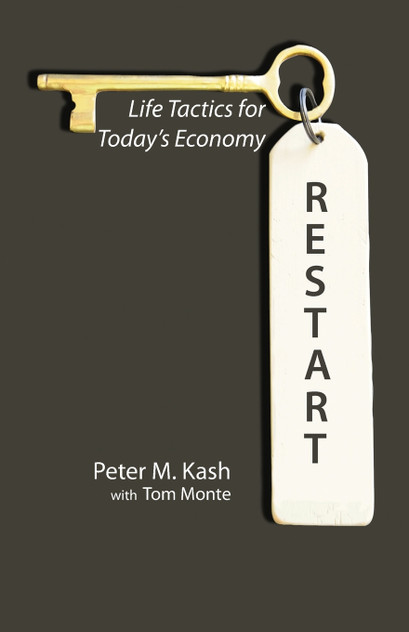
In this original view on what makes for business success, Peter Kash sees opportunity even in today's challenging economy. Kash, one of Wall Street's most successful venture capitalists, shows how to...
From the acclaimed authors of Capitalism without Capital, radical ideas for restoring prosperity in today's intangible economyThe past two decades have witnessed sluggish economic growth, mounting...
"Just Restart: An ultimate toolkit to master your mind" invites readers into a transformative journey. In a world where we effortlessly restart electronic gadgets, this book prompts a profound...
Marketing executive and mother of two, Jade Kelly can now add cancer survivor to her list of successes. But while her life looks good on paper, four months out of treatment, Jade realizes she hardly...
Discover your next great read at BookLoop, Australiand online bookstore offering a vast selection of titles across various genres and interests. Whether you're curious about what's trending or searching for graphic novels that captivate, thrilling crime and mystery fiction, or exhilarating action and adventure stories, our curated collections have something for every reader. Delve into imaginative fantasy worlds or explore the realms of science fiction that challenge the boundaries of reality. Fans of contemporary narratives will find compelling stories in our contemporary fiction section. Embark on epic journeys with our fantasy and science fiction titles,
Shop Trending Books and New Releases
Explore our new releases for the most recent additions in romance books, fantasy books, graphic novels, crime and mystery books, science fiction books as well as biographies, cookbooks, self help books, tarot cards, fortunetelling and much more. With titles covering current trends, booktok and bookstagram recommendations, and emerging authors, BookLoop remains your go-to local australian bookstore for buying books online across all book genres.
Shop Best Books By Collection
Stay updated with the literary world by browsing our trending books, featuring the latest bestsellers and critically acclaimed works. Explore titles from popular brands like Minecraft, Pokemon, Star Wars, Bluey, Lonely Planet, ABIA award winners, Peppa Pig, and our specialised collection of ADHD books. At BookLoop, we are committed to providing a diverse and enriching reading experience for all.
Sign In
your cart
Your cart is empty
Menu
Search
PRE-SALES
If you have any questions before making a purchase chat with our online operators to get more information.