Trending Bestseller

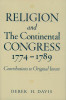
Religion and the Continental Congress, 1774-1789

No reviews yet Write a Review
This book offers the first comprehensive examination of the role of religion in the proceedings, theories, ideas and goals of the Continental Congress. Those who argue that the U.S. was founded as a "Christian Nation" have made much of the religiosity of the founders, particularly as it was manifested in ritual invocations of a clearly Christian God. Congress's religious activities, Davis shows, expressed an unreflective popular piety, and by no means a determination of the revolutionaries to entrench religion in the federal state.
Hardback
01-May-2000
RRP: $399.00
$233.00
Ships in 3-5 business days
Hurry up! Current stock:
How did the constitutional framers envision the role of religion in American public life? Did they think that the government had the right to advance or support religion and religious activities? Or did they believe that the two realms should remain forever separate? Throughout American history, scholars, Supreme Court justices, and members of the American public have debated these questions. The debate continues to have significance in the present day, especially in regard to public schools, government aid to sectarian education, and the use of public property for religious symbols.In this book, Derek Hamilton Davis offers the first comprehensive examination of the role of religion in the proceedings, theories, ideas, and goals of the Continental Congress. Those who argue that the United States was founded as a "Christian Nation" have made much of the religiosity of the founders, particularly as it was manifested in the ritual invocations of a clearly Christian God as well as in the adoption of practices such as government-sanctioned days of fasting and thanksgiving, prayers and preaching before legislative bodies, and the appointments of chaplains to the Army. Davis looks at the fifteen-year experience of the Continental Congress (1774-1789) and arrives at a contrary conclusion: namely, that the revolutionaries did not seek to entrench religion in the federal state. Congress's religious activities, he shows, expressed a genuine but often unreflective popular piety. Indeed, the whole point of the revolution was to distinguish society, the people in its sovereign majesty, from its government. A religious people would jealously guard its own sovereignty and the sovereignty of God by preventing republican rulers from pretending to any authority over religion. The idea that a modern nation could be premised on expressly theological foundations, Davis argues, was utterly antithetical to the thinking of most revolutionaries.

This product hasn't received any reviews yet. Be the first to review this product!

RRP: $399.00
$233.00
Ships in 3-5 business days
Hurry up! Current stock:

Religion and the Continental Congress, 1774-1789

RRP: $399.00
$233.00

Description

How did the constitutional framers envision the role of religion in American public life? Did they think that the government had the right to advance or support religion and religious activities? Or did they believe that the two realms should remain forever separate? Throughout American history, scholars, Supreme Court justices, and members of the American public have debated these questions. The debate continues to have significance in the present day, especially in regard to public schools, government aid to sectarian education, and the use of public property for religious symbols.In this book, Derek Hamilton Davis offers the first comprehensive examination of the role of religion in the proceedings, theories, ideas, and goals of the Continental Congress. Those who argue that the United States was founded as a "Christian Nation" have made much of the religiosity of the founders, particularly as it was manifested in the ritual invocations of a clearly Christian God as well as in the adoption of practices such as government-sanctioned days of fasting and thanksgiving, prayers and preaching before legislative bodies, and the appointments of chaplains to the Army. Davis looks at the fifteen-year experience of the Continental Congress (1774-1789) and arrives at a contrary conclusion: namely, that the revolutionaries did not seek to entrench religion in the federal state. Congress's religious activities, he shows, expressed a genuine but often unreflective popular piety. Indeed, the whole point of the revolution was to distinguish society, the people in its sovereign majesty, from its government. A religious people would jealously guard its own sovereignty and the sovereignty of God by preventing republican rulers from pretending to any authority over religion. The idea that a modern nation could be premised on expressly theological foundations, Davis argues, was utterly antithetical to the thinking of most revolutionaries.

Customers Also Viewed