
Trending Bestseller

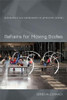
Refrains for Moving Bodies

No reviews yet Write a Review
Hardback
288 Pages
$194.66
Ships in 3-5 business days
Hurry up! Current stock:
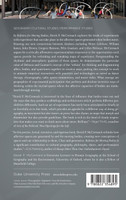
In Refrains for Moving Bodies, Derek P. McCormack explores the kinds of experiments with experience that can take place in the affective spaces generated when bodies move. Drawing out new connections between thinkers including Henri Lefebvre, William James, John Dewey, Gregory Bateson, Felix Guattari, and Gilles Deleuze, McCormack argues for a critically affirmative experimentalism responsive to the opportunities such spaces provide for rethinking and remaking maps of experience. Foregrounding the rhythmic and atmospheric qualities of these spaces, he demonstrates the particular value of Deleuze and Guattari's concept of the "refrain" for thinking and diagramming affect, bodies, and space-times together in creative ways, putting this concept to work to animate empirical encounters with practices and technologies as varied as dance therapy, choreography, radio sports commentary, and music video. What emerges are geographies of experimental participation that perform and disclose inventive ways of thinking within the myriad spaces where the affective capacities of bodies are modulated through moving.
Book Details
ISBN-13
9780822354895
Author
Derek P. McCormack
Format
Hardback
Pages
288

This product hasn't received any reviews yet. Be the first to review this product!

$194.66
Ships in 3-5 business days
Hurry up! Current stock:

Refrains for Moving Bodies

$194.66

Description

In Refrains for Moving Bodies, Derek P. McCormack explores the kinds of experiments with experience that can take place in the affective spaces generated when bodies move. Drawing out new connections between thinkers including Henri Lefebvre, William James, John Dewey, Gregory Bateson, Felix Guattari, and Gilles Deleuze, McCormack argues for a critically affirmative experimentalism responsive to the opportunities such spaces provide for rethinking and remaking maps of experience. Foregrounding the rhythmic and atmospheric qualities of these spaces, he demonstrates the particular value of Deleuze and Guattari's concept of the "refrain" for thinking and diagramming affect, bodies, and space-times together in creative ways, putting this concept to work to animate empirical encounters with practices and technologies as varied as dance therapy, choreography, radio sports commentary, and music video. What emerges are geographies of experimental participation that perform and disclose inventive ways of thinking within the myriad spaces where the affective capacities of bodies are modulated through moving.