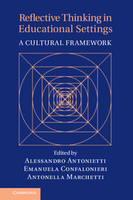
This volume examines the role that culture plays in the acquisition of cognitive, linguistic, and social skills. Taking reflective thinking as a central analytical concept, the contributors investigate the role of personal reflection in a series of mental activities, including the creation of social relationships, the creation of a mental narrative to make sense of events, and metacognition. These three types of cognition are usually conceived of as separate research fields. Reflective Thinking in Educational Settings draws these discrete subfields into dialogue, exploring the connections and interplay among them. This approach yields insight into a range of topics, including language acquisition, cognitive processes, theory of mind, cross-cultural interaction, and social development. The volume also outlines the implications of these findings in terms of further research and possible social policy initiatives.
Most aspects of modern society seem to be ruled by a desire for everything to be bigger, better, greater, faster, leaving little room for reflection on what is really important in life. As we drive...
The key question this book addresses is how to identify and create optimal conditions for the kind of learning and development that is especially important for effectively functioning in the 21st...
This book provides a comprehensive look at all levels of teaching and learning, especially for those interested in discovering how to provide activities that will enhance reflective practices in...
This work is designed to assist the Educator or Para-professional in doing a self analysis, through reflection, so that they may be more effective in the development of school aged children.