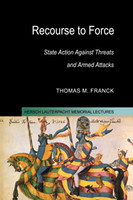

The nations that drafted the UN Charter in 1945 clearly were more concerned about peace than about justice. As a result, the Charter prohibits all use of force by states except in the event of an armed attack or when authorised by the Security Council. This arrangement has only very imperfectly withstood the test of time and changing world conditions. In requiring states not to use force in self-defence until after they had become the object of an actual armed attack, the Charter failed to address a growing phenomenon of clandestine subversion and of instantaneous nuclear threats. Fortunately although the Charter is very hard to amend, the drafters did agree that it should be interpreted flexibly by the United Nations' principal political institutions. In this way the norms governing use of force in international affairs have been adapted to meet changing circumstances and new challenges. The book also relates these changes in law and practice to changing public values pertaining to the balance between maintaining peace and promoting justice.
Matthew Lawrence was a highly successful lawyer with a major law firm. He had a beautiful wife and loving daughter. But he made a life-changing mistake; he chose to represent a bank whose owner...
Accessible and clearly structured, this is the first book to include examinations of public and private law in the discussion about access to foreign laws. With commentaries by an international...
The LP recourse problem applies to two-stage optimization problems where uncertainty in resource availability of the second stage hinders informed decision making. The recourse function affords a way...