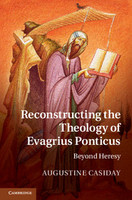
Evagrius Ponticus is regarded by many scholars as the architect of the eastern heresy Origenism, as his theology corresponded to the debates that erupted in 399 and episodically thereafter, culminating in the Second Council of Constantinople in 553 AD. However some scholars now question this conventional interpretation of Evagrius' place in the Origenist controversies. Augustine Casiday sets out to reconstruct Evagrius' theology in its own terms, freeing interpretation of his work from the reputation for heresy that overwhelmed it, and studying his life, writings and evolving legacy in detail. The first part of this book discusses the transmission of Evagrius' writings, and provides a framework of his life for understanding his writing and theology, whilst part two moves to a synthetic study of major themes that emerge from his writings. This book will be an invaluable addition to scholarship on Christian theology, patristics, heresy and ancient philosophy.
A revered instructor of the eremitic monks of Nitria, Sketis and Kellia, Evagrius Ponticus is a fascinating yet enigmatic figure in the history of fourth-century mystical thought. This historical and...
This study puts the thought of Evagrius Ponticus, a fourth-century theologian, into dialogue with modern cognitive science in regard to the topic of evil, specifically moral evil. Evagrius, in his...
Evagrius Ponticus was the most prolific writer of the Christian Desert Fathers. This book is a study of his life, works, and theology. It gives particular attention to his little-studied exegetical...
A collection of fifteen essays addressing the basic intellectual challenges to the contemporary Christian church. Professor Torrance deals with such topics as the centrality of Christology in...
King's exploration of the role of theology in the reconstruction of society and religion is both enlightening and informative. This book is a must-read for anyone interested in the intersection of...