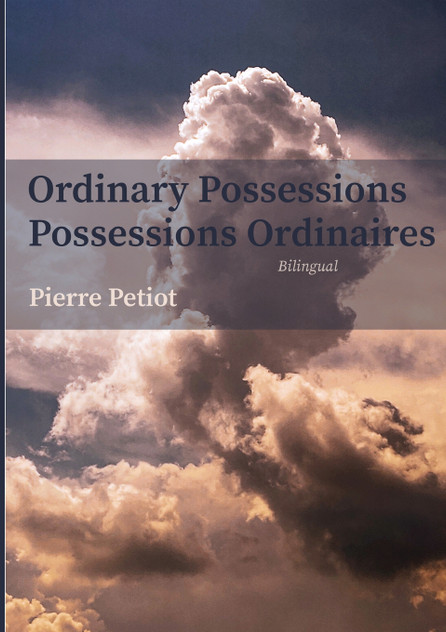
A thought-provoking study of how knowledge of provenance was not transferred with enslaved people and goods from the Portuguese trading empire to Renaissance Italy In the fifteenth and sixteenth centuries, Renaissance Italy received a bounty of "goods" from Portuguese trading voyages-fruits of empire that included luxury goods, exotic animals and even enslaved people. Many historians hold that this imperial "opening up" of the world transformed the way Europeans understood the global. In this book, K.J.P. Lowe challenges such an assumption, showing that Italians of this era cared more about the possession than the provenance of their newly acquired global goods. With three detailed case studies involving Florence and Rome, and drawing on unpublished archival material, Lowe documents the myriad occasions on which global knowledge became dissociated from overseas objects, animals and people. Fundamental aspects of these imperial imports, including place of origin and provenance, she shows, failed to survive the voyage and make landfall in Europe. Lowe suggests that there were compelling reasons for not knowing or caring about provenance, and concludes that geographical knowledge, like all knowledge, was often restricted and not valued. Examining such documents as ledger entries, journals and public and private correspondence as well as extant objects, and asking previously unasked questions, Lowe meticulously reconstructs the backstories of Portuguese imperial acquisitions, painstakingly supplying the context. She chronicles the phenomenon of mixed-ancestry children at Florence's foundling hospital; the ownership of inanimate luxury goods, notably those possessed by the Medicis; and the acquisition of enslaved people and animals. How and where goods were acquired, Lowe argues, were of no interest to fifteenth- and sixteenth-century Italians; possession was paramount.
A thought-provoking study of how knowledge of provenance was not transferred with enslaved people and goods from the Portuguese trading empire to Renaissance Italy In the fifteenth and sixteenth centuries, Renaissance Italy received a bounty of "goods" from Portuguese trading voyages-fruits of empire that included luxury goods, exotic animals and even enslaved people. Many historians hold that this imperial "opening up" of the world transformed the way Europeans understood the global. In this book, K.J.P. Lowe challenges such an assumption, showing that Italians of this era cared more about the possession than the provenance of their newly acquired global goods. With three detailed case studies involving Florence and Rome, and drawing on unpublished archival material, Lowe documents the myriad occasions on which global knowledge became dissociated from overseas objects, animals and people. Fundamental aspects of these imperial imports, including place of origin and provenance, she shows, failed to survive the voyage and make landfall in Europe. Lowe suggests that there were compelling reasons for not knowing or caring about provenance, and concludes that geographical knowledge, like all knowledge, was often restricted and not valued. Examining such documents as ledger entries, journals and public and private correspondence as well as extant objects, and asking previously unasked questions, Lowe meticulously reconstructs the backstories of Portuguese imperial acquisitions, painstakingly supplying the context. She chronicles the phenomenon of mixed-ancestry children at Florence's foundling hospital; the ownership of inanimate luxury goods, notably those possessed by the Medicis; and the acquisition of enslaved people and animals. How and where goods were acquired, Lowe argues, were of no interest to fifteenth- and sixteenth-century Italians; possession was paramount.
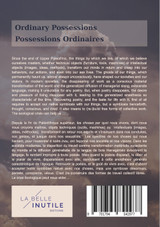
Since the end of Upper Paleolithic, the things by which we live, of which we believe ourselves masters, whether technical objects (furniture, tools, machines) or intellectual objects (images, ideas,...
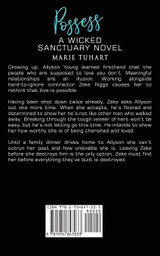
Wicked Sanctuary: Surrender your inhibitions.Growing up, Allyson Young learned firsthand that, sometimes, the people who are supposed to love you don't. Meaningful relationships are an illusion...
In Possessed, Rebecca R. Falkoff asks how hoarding-once a paradigm of economic rationality-came to be defined as a mental illness. Hoarding is unique among the disorders included in the American...
Discover your next great read at BookLoop, Australiand online bookstore offering a vast selection of titles across various genres and interests. Whether you're curious about what's trending or searching for graphic novels that captivate, thrilling crime and mystery fiction, or exhilarating action and adventure stories, our curated collections have something for every reader. Delve into imaginative fantasy worlds or explore the realms of science fiction that challenge the boundaries of reality. Fans of contemporary narratives will find compelling stories in our contemporary fiction section. Embark on epic journeys with our fantasy and science fiction titles,
Shop Trending Books and New Releases
Explore our new releases for the most recent additions in romance books, fantasy books, graphic novels, crime and mystery books, science fiction books as well as biographies, cookbooks, self help books, tarot cards, fortunetelling and much more. With titles covering current trends, booktok and bookstagram recommendations, and emerging authors, BookLoop remains your go-to local australian bookstore for buying books online across all book genres.
Shop Best Books By Collection
Stay updated with the literary world by browsing our trending books, featuring the latest bestsellers and critically acclaimed works. Explore titles from popular brands like Minecraft, Pokemon, Star Wars, Bluey, Lonely Planet, ABIA award winners, Peppa Pig, and our specialised collection of ADHD books. At BookLoop, we are committed to providing a diverse and enriching reading experience for all.
Sign In
your cart
Your cart is empty
Menu
Search
PRE-SALES
If you have any questions before making a purchase chat with our online operators to get more information.