
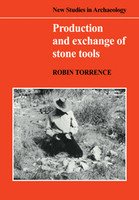

Originally published in 1986, the aim of this important study was to develop methods for reconstructing the processes of prehistoric exchange. Previous archaeological work had concentrated on mapping obsidian finds relative to source areas using trace-element analysis and on investigating the effect of trade on particular cultural groups. Dr Torrence, in contrast, drew extensively on ethnographic analogy to develop an approach that uses differences in the level of efficiency for the acquisition of raw materials and the production of goods to infer the type of exchange. Regional patterns of tool manufacture, specialist craft production at central places and quarrying are analysed in detail in the context of the prehistoric Aegean and previous ideas about the importance of trade in the growth of civilisations are re-assessed. The methodology developed will be applicable to a wide range of artefact types and the book will therefore be of value to archaeologists working in many different places and periods.
Lithic analysts have been criticized for being atheoretical in their approach, or at least for not contributing to building archaeological theory. This volume redresses that balance. In Stone ...
Stone tools are the most durable and, in some cases, the only category of material evidence that students of prehistory have at their disposal. Exploring the changing character and context of stone...
This work has been selected by scholars as being culturally important, and is part of the knowledge base of civilization as we know it. This work was reproduced from the original artifact, and...
Title: Remarks ... at the laying of the corner stone of the Boston Exchange.Publisher: British Library, Historical Print EditionsThe British Library is the national library of the United Kingdom. It...