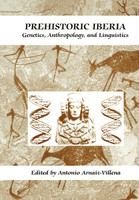
The symposium "Prehistoric Iberia: genetics, anthropology and linguistics" was held in the Circulo de Bellas Artes, Madrid on 16th -17th November 1998. The idea was bringing together specialists who could address not clearly resolved historic and prehistoric issues regarding ancient Iberian and Mediterranean populations, following a multidisciplinary approach. This was necessary in the light of the new bulk of genetic, archeological and linguistic data obtained with the new DNA technology and the recent discoverings in the other fields. Genes may now be easily studied in populations, particularly HLA genes and markers of the mitochondrial DNA and the Y chromosome. Basques, Iberians, North Africans, Berbers (Imazighen) and Mediterraneans have presently been widely studied. The genetic emerging picture is that Mediterraneans are closely related from West (Basque, Iberians, Berbers) to East (Jews, Lebanese, Cretans); however, Greeks are outliers in all the analyses done by using HLA genes. Anthropologists and archeologists showed how there was no people substitution during the revolutionary Mesolithic-Neolithic transition; in addition, cultural relationships were found between Iberia and predinastic Egypt (EI Badari culture). Basque language translation into Spanish has been the key for relating most Mediterranean extinct languages. The Usko-Mediterranean languages were once spoken in a wide African and European area, which also included parts of Asia. This was the "old language" that was slowly substituted by Eurasian languages starting approximately after the Bronze Age (or 2,000 years BC).
The symposium "Prehistoric Iberia: genetics, anthropology and linguistics" was held in the Circulo de Bellas Artes, Madrid on 16th -17th November 1998. The idea was bringing together specialists who could address not clearly resolved historic and prehistoric issues regarding ancient Iberian and Mediterranean populations, following a multidisciplinary approach. This was necessary in the light of the new bulk of genetic, archeological and linguistic data obtained with the new DNA technology and the recent discoverings in the other fields. Genes may now be easily studied in populations, particularly HLA genes and markers of the mitochondrial DNA and the Y chromosome. Basques, Iberians, North Africans, Berbers (Imazighen) and Mediterraneans have presently been widely studied. The genetic emerging picture is that Mediterraneans are closely related from West (Basque, Iberians, Berbers) to East (Jews, Lebanese, Cretans); however, Greeks are outliers in all the analyses done by using HLA genes. Anthropologists and archeologists showed how there was no people substitution during the revolutionary Mesolithic-Neolithic transition; in addition, cultural relationships were found between Iberia and predinastic Egypt (EI Badari culture). Basque language translation into Spanish has been the key for relating most Mediterranean extinct languages. The Usko-Mediterranean languages were once spoken in a wide African and European area, which also included parts of Asia. This was the "old language" that was slowly substituted by Eurasian languages starting approximately after the Bronze Age (or 2,000 years BC).
This is a reproduction of a book published before 1923. This book may have occasional imperfections such as missing or blurred pages, poor pictures, errant marks,...
Martyred saints, Moors, Jews, viragoes, hermaphrodites, sodomites, kings, queens, and cross-dressers comprise the fascinating mosaic of historical and imaginative figures unearthed in Queer Iberia...
This work has been selected by scholars as being culturally important, and is part of the knowledge base of civilization as we know it.This work is in the "public domain in the United States of...
For many archaeologists, Iberia is the last great unknown region in Europe. Although it occupies a crucial position between South-Western Europe and North Africa, academic attention has traditionally...
Discover your next great read at BookLoop, Australiand online bookstore offering a vast selection of titles across various genres and interests. Whether you're curious about what's trending or searching for graphic novels that captivate, thrilling crime and mystery fiction, or exhilarating action and adventure stories, our curated collections have something for every reader. Delve into imaginative fantasy worlds or explore the realms of science fiction that challenge the boundaries of reality. Fans of contemporary narratives will find compelling stories in our contemporary fiction section. Embark on epic journeys with our fantasy and science fiction titles,
Shop Trending Books and New Releases
Explore our new releases for the most recent additions in romance books, fantasy books, graphic novels, crime and mystery books, science fiction books as well as biographies, cookbooks, self help books, tarot cards, fortunetelling and much more. With titles covering current trends, booktok and bookstagram recommendations, and emerging authors, BookLoop remains your go-to local australian bookstore for buying books online across all book genres.
Shop Best Books By Collection
Stay updated with the literary world by browsing our trending books, featuring the latest bestsellers and critically acclaimed works. Explore titles from popular brands like Minecraft, Pokemon, Star Wars, Bluey, Lonely Planet, ABIA award winners, Peppa Pig, and our specialised collection of ADHD books. At BookLoop, we are committed to providing a diverse and enriching reading experience for all.
Sign In
your cart
Your cart is empty
Menu
Search
PRE-SALES
If you have any questions before making a purchase chat with our online operators to get more information.