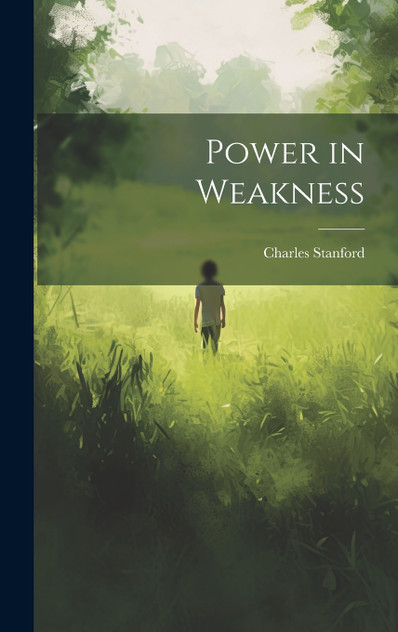
Dr Savage seeks to understand the apostle Paul's apparently contradictory description of his ministry in 2 Corinthians as one in which power is manifested through weakness: 'When I am weak, then I am strong!' This paradox becomes intelligible when it is understood that Paul's critics were influenced by a perspective which was the exact opposite of his: they imbibed the self-exalting outlook of their contemporary world, while he embraced the self-emptying gospel of Christ. Drawing from archaeological data on first-century Corinth, this study is unique in establishing both the secular underpinnings of Paul's paradoxical language and the devastating critique which that language offers on the general outlook of the first century. Paul emerges as a radical foil to the spirit of the age.
In Power in Weakness, Charles Stanford reflects upon the Apostle Paul's teachings on strength through weakness and applies them to our modern lives. Stanford powerfully illustrates how the apparently...
The Power of Weakness is written from a place of pain for the purpose of healing. Hilari's current passion is to encourage the hearts of those who feel stuck as they navigate through grief. Although...
This work has been selected by scholars as being culturally important, and is part of the knowledge base of civilization as we know it. This work was reproduced from the original artifact, and...
In his famous theses on the philosophy of history, Benjamin writes: "We have been endowed with a weak messianic power to which the past has a claim." This claim addresses us not just from the past...