cians concerned with using logical tools in philosophy have been keenly aware of the limitations that arise from the original con centration of symbolic logic on the idiom of mathematics, and many of them have worked to create extensions of the received logical theories that would make them more generally applicable in philosophy. Carnap's Testability and Meaning, published in 1936 and 1937, was a good early example of this sort of research, motivated by the inadequacy of first-order formalizations of dis 'This sugar cube is soluble in water'. positional sentences like And in fact there is a continuous history of work on this topic, extending from Carnap's paper to Shoham's contribution to the present volume . . Much of the work in philosophical logic, and much of what has appeared in The Journal of Philosophical Logic, was mo tivated by similar considerations: work in modal logic (includ ing tense, deontic, and epistemic logic), intensional logics, non declaratives, presuppositions, and many other topics. In this sort of research, sin.ce the main point is to devise new formalisms, the technical development tends to be rather shallow in comparison with mathematical logic, though it is sel dom absent: theorems need to be proved in order to justify the formalisms, and sometimes these are nontrivial. On the other hand, much effort has to go into motivating a logical innovation.
cians concerned with using logical tools in philosophy have been keenly aware of the limitations that arise from the original con centration of symbolic logic on the idiom of mathematics, and many of them have worked to create extensions of the received logical theories that would make them more generally applicable in philosophy. Carnap's Testability and Meaning, published in 1936 and 1937, was a good early example of this sort of research, motivated by the inadequacy of first-order formalizations of dis 'This sugar cube is soluble in water'. positional sentences like And in fact there is a continuous history of work on this topic, extending from Carnap's paper to Shoham's contribution to the present volume . . Much of the work in philosophical logic, and much of what has appeared in The Journal of Philosophical Logic, was mo tivated by similar considerations: work in modal logic (includ ing tense, deontic, and epistemic logic), intensional logics, non declaratives, presuppositions, and many other topics. In this sort of research, sin.ce the main point is to devise new formalisms, the technical development tends to be rather shallow in comparison with mathematical logic, though it is sel dom absent: theorems need to be proved in order to justify the formalisms, and sometimes these are nontrivial. On the other hand, much effort has to go into motivating a logical innovation.
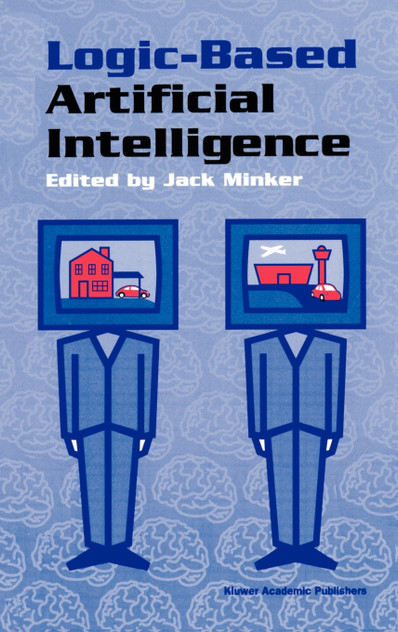
Logics have, for many years, laid claim to providing a formal basis for the study and development of applications and systems in arti?cial intelligence. With the depth and maturity of formalisms,...
The use of mathematical logic as a formalism for artificial intelligence was recognized by John McCarthy in 1959 in his paper on Programs with Common Sense. In a series of papers in the 1960's he...
Focusing on the cutting-edge applications of AI cognitive computing from neuromorphic to quantum cognition as applied to AI business analytics, this volume explores AI's importance in managing...
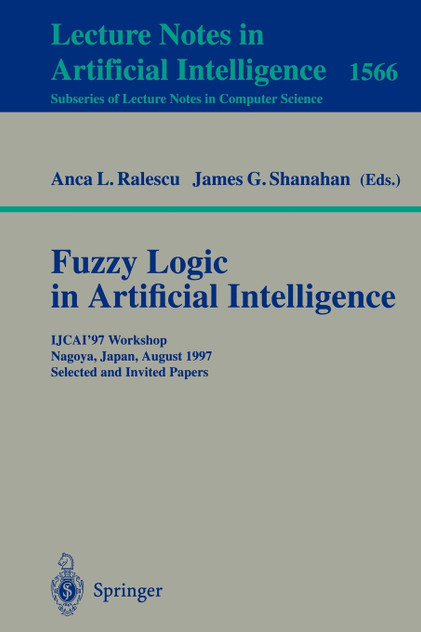
This volume constitutes the thoroughly refereed post-workshop proceedings of an international workshop on fuzzy logic in Artificial Intelligence held in Negoya, Japan during IJCAI '97.The 17 revised...
There are three outstanding points of this book. First: for the first time, a collective point of view on the role of artificial intelligence paradigm in logic design is introduced. Second, the book...
Discover your next great read at BookLoop, Australiand online bookstore offering a vast selection of titles across various genres and interests. Whether you're curious about what's trending or searching for graphic novels that captivate, thrilling crime and mystery fiction, or exhilarating action and adventure stories, our curated collections have something for every reader. Delve into imaginative fantasy worlds or explore the realms of science fiction that challenge the boundaries of reality. Fans of contemporary narratives will find compelling stories in our contemporary fiction section. Embark on epic journeys with our fantasy and science fiction titles,
Shop Trending Books and New Releases
Explore our new releases for the most recent additions in romance books, fantasy books, graphic novels, crime and mystery books, science fiction books as well as biographies, cookbooks, self help books, tarot cards, fortunetelling and much more. With titles covering current trends, booktok and bookstagram recommendations, and emerging authors, BookLoop remains your go-to local australian bookstore for buying books online across all book genres.
Shop Best Books By Collection
Stay updated with the literary world by browsing our trending books, featuring the latest bestsellers and critically acclaimed works. Explore titles from popular brands like Minecraft, Pokemon, Star Wars, Bluey, Lonely Planet, ABIA award winners, Peppa Pig, and our specialised collection of ADHD books. At BookLoop, we are committed to providing a diverse and enriching reading experience for all.
Sign In
your cart
Your cart is empty
Menu
Search
PRE-SALES
If you have any questions before making a purchase chat with our online operators to get more information.