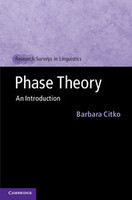
Phase Theory is the latest empirical and conceptual innovation in syntactic theory within the Chomskyan generative tradition. Adopting a cross-linguistic perspective, this book provides an introduction to Phase Theory, tracing the development of phases in minimalist syntax. It reviews both empirical and theoretical arguments in favor of phases, and examines the role phases play at the interface with semantics and phonology. Analyzing current phasehood diagnostics, it applies them in a systematic fashion to a broad range of syntactic categories, both phases and non-phases. It concludes with a discussion of some of the more contentious issues in Phase Theory, involving cross-linguistic variation with respect to phasehood and the dynamic versus static nature of phases.
This groundbreaking work by Douglas Arthur Clibbens presents a new theoretical framework for understanding the chemistry of salts and their aqueous solutions. A must-read for chemists, chemical...
The overarching goal of this volume is to explore a number of recent developments in Phase Theory (both theoretical and empirical), thus contributing to our overall understanding of the concept of...
There are nearly 100 000 different protein sequences encoded in the human genome, each with its own specific fold. Understanding how a newly formed polypeptide sequence finds its way to the correct...