Trending Bestseller

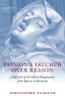
Passion's Triumph over Reason

No reviews yet Write a Review
Christopher Tilmouth's wide-ranging study of Early Modern ideas of the passions explores a series of philosophical authors in relation to poets and dramatists of the period 1580 to 1680. Aristotle, Aquinas, Augustine, and Hobbes receive detailed treatment here, alongside Spenser's Faerie Queene, Hamlet and Julius Caesar, the lyrics of Herbert and Crashaw, and Milton's Paradise Lost. Central to this innovative exploration of literary-philosophical relations is a comprehensive reappraisal of the works of the Earl of Rochester.
Hardback
24-May-2007
432 Pages
RRP: $377.00
$247.00
Ships in 3-5 business days
Hurry up! Current stock:
Passion's Triumph over Reason presents a comprehensive survey of ideas of emotion, appetite, and self-control in English literature and moral thought of the sixteenth and seventeenth centuries. In a narrative which draws on tragedy, epic poetry, and moral philosophy, Christopher Tilmouth explores how Renaissance writers transformed their understanding of the passions, re-evaluating emotion so as to make it an important constituent of ethical life rather than the enemy within which allegory had traditionally cast it as being. This interdisciplinary study departs from current emphases in intellectual history, arguing that literature should be explored alongside the moral rather than political thought of its time. The book also develops a new approach to understanding the relationship between literature and philosophy. Consciously or not, moral thinkers tend to ground their philosophising in certain images of human nature. Their work is premissed on imagined models of the mind and presumed estimates of man's moral potential. In other words, the thinking of philosophical authors (as much as that of literary ones) is shaped by the pre-rational assumptions of the 'moral imagination'. Because that is so, poets and dramatists in their turn, in speaking to this material, typically do more than just versify the abstract ideas of ethics. They reflect, directly and critically, upon those same core assumptions which are integral to the writings of their philosophical counterparts. Authors examined here include Aristotle, Augustine, Hobbes, and an array of lyric poets; but there are new readings, too, of The Faerie Queene and Paradise Lost, Hamlet and Julius Caesar, Dryden's 'Lucretius', and Etherege's Man of Mode. Tilmouth's study concludes with a revisionist interpretation of the works of the Earl of Rochester, presenting this libertine poet as a challenging, intellectually serious figure. Written in a lucid, accessible style, this book will appeal to a wide range of readers.

This product hasn't received any reviews yet. Be the first to review this product!

RRP: $377.00
$247.00
Ships in 3-5 business days
Hurry up! Current stock:

Passion's Triumph over Reason

RRP: $377.00
$247.00

Description

Passion's Triumph over Reason presents a comprehensive survey of ideas of emotion, appetite, and self-control in English literature and moral thought of the sixteenth and seventeenth centuries. In a narrative which draws on tragedy, epic poetry, and moral philosophy, Christopher Tilmouth explores how Renaissance writers transformed their understanding of the passions, re-evaluating emotion so as to make it an important constituent of ethical life rather than the enemy within which allegory had traditionally cast it as being. This interdisciplinary study departs from current emphases in intellectual history, arguing that literature should be explored alongside the moral rather than political thought of its time. The book also develops a new approach to understanding the relationship between literature and philosophy. Consciously or not, moral thinkers tend to ground their philosophising in certain images of human nature. Their work is premissed on imagined models of the mind and presumed estimates of man's moral potential. In other words, the thinking of philosophical authors (as much as that of literary ones) is shaped by the pre-rational assumptions of the 'moral imagination'. Because that is so, poets and dramatists in their turn, in speaking to this material, typically do more than just versify the abstract ideas of ethics. They reflect, directly and critically, upon those same core assumptions which are integral to the writings of their philosophical counterparts. Authors examined here include Aristotle, Augustine, Hobbes, and an array of lyric poets; but there are new readings, too, of The Faerie Queene and Paradise Lost, Hamlet and Julius Caesar, Dryden's 'Lucretius', and Etherege's Man of Mode. Tilmouth's study concludes with a revisionist interpretation of the works of the Earl of Rochester, presenting this libertine poet as a challenging, intellectually serious figure. Written in a lucid, accessible style, this book will appeal to a wide range of readers.

Customers Also Viewed