
Trending Bestseller

Paper Weapons

A Historical Epistemology of American Eugenics

No reviews yet Write a Review
Paperback / softback
28 January 2024
$54.43
Ships in 3-5 business days

Hurry up! Current stock:
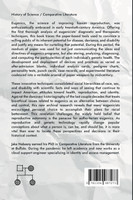
Eugenics, the science of improving human reproduction, was enthusiastically embraced in early twentieth-century America. Offering the first thorough analysis of eugenicists' diagnostic and therapeutic techniques, this book traces the paper-based tools used to convince a willing public of its inherent potential for disease, deviance, and disability and justify any means for curtailing that potential. During this period, the medium of paper was used for not just communicating the ideas and directives of eugenics programs, but also storing, analyzing, diagnosing, and computing the particularities of each individual's genetic health. The development and deployment of devices and practices as varied as after-admission blanks, individual analysis cards, pedigree charts, personality tests, punch cards, case records, and experimental literature coalesced into a veritable arsenal of paper weapons by mid-century. These innovative techniques consolidated social hierarchies of race, sex, and disability with scientific facts and ways of seeing that continue to impact American attitudes toward health, reproduction, and identity. Against the dominant historiography of the last couple decades that treats bio-ethical issues related to eugenics as an alternative between choice and control, this new archival research reveals that many eugenicists encouraged personal choice to accomplish their plans for racial betterment. This revelation challenges the widely held belief that reproductive autonomy is the panacea for authoritarian eugenics. As reproductive and genetic technology rapidly change popular conceptions about what a person is, can be, and should be, it is more vital than ever to locate these perspectives and decisions in their historical context.

You Can Find This Book In

    Book Details
    ISBN-13
    9781304987273
    Author
    Jake Nabasny
    Publisher
    Lulu Press
    Published
    28 January 2024
    Format
    Paperback / softback

    This product hasn't received any reviews yet. Be the first to review this product!

    $54.43
    Ships in 3-5 business days
    Hurry up! Current stock:

    Paper Weapons

    $54.43

    Description

    Eugenics, the science of improving human reproduction, was enthusiastically embraced in early twentieth-century America. Offering the first thorough analysis of eugenicists' diagnostic and therapeutic techniques, this book traces the paper-based tools used to convince a willing public of its inherent potential for disease, deviance, and disability and justify any means for curtailing that potential. During this period, the medium of paper was used for not just communicating the ideas and directives of eugenics programs, but also storing, analyzing, diagnosing, and computing the particularities of each individual's genetic health. The development and deployment of devices and practices as varied as after-admission blanks, individual analysis cards, pedigree charts, personality tests, punch cards, case records, and experimental literature coalesced into a veritable arsenal of paper weapons by mid-century. These innovative techniques consolidated social hierarchies of race, sex, and disability with scientific facts and ways of seeing that continue to impact American attitudes toward health, reproduction, and identity. Against the dominant historiography of the last couple decades that treats bio-ethical issues related to eugenics as an alternative between choice and control, this new archival research reveals that many eugenicists encouraged personal choice to accomplish their plans for racial betterment. This revelation challenges the widely held belief that reproductive autonomy is the panacea for authoritarian eugenics. As reproductive and genetic technology rapidly change popular conceptions about what a person is, can be, and should be, it is more vital than ever to locate these perspectives and decisions in their historical context.

    You Can Find This Book In

      This Book Is Categorised As