Trending Bestseller

Origin of "Semitic" Languages

Adel S. Bishtawi

No reviews yet Write a Review
Paperback / softback
04 September 2013
$51.00
Ships in 5–7 business days
Hurry up! Current stock:
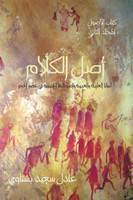
From the author of the Origins of Arabic Numerals-a Natural History of Numbers, an AuthorHouse publication, and Natural Foundations of Arab Civilisation-Origins of Alphabets, Numeration, Numerals, Measurements, Weights, Litigation, and Money . . . Book of Origins Part II (in Arabic) Origin of Semitic Languages Introductory Etymological Study of the Prehistoric Ancestral Linguistic Nuclei and Monosyllables of Semitic Languages Primarily Based on Akkadian and Southern and Northern Arabic Adel S. Bishtawi The unity of what is traditionally called Semitic languages may be traced in the roots, in the inflections, and in the general features of the syntax. Almost a thousand years before the publication in 1781 of Repertorium fuer biblische und morgenlaendische Literatur, linguists studying certain features of Canaanite (Phoenician), Hebrew, Arabic, and Ethiopic (Ḥabaši) noted the interrelationship of these languages. Other studies pointed to a prehistoric ancestral origin for these and more than sixty other languages, first named Ursemitische and later Proto-Semitic. Research involving the history of the Arabic numerals established their prehistoric origin and confirmed a linguistic link between small numbers and small words. The scope and depth of the multilayered research were expanded in an attempt to identify the origin of Semitic languages and, probably, the origin of languages. It took more than two years to realise that the pioneering linguists of Arabic were not aware of the main building blocks of the language they treated and that the smaller biconsonantals, not triconsonantals as is widely believed, were the original roots of the Semitic languages. At one time in the remotest horizon of their history, the language consisted of a very limited number biconsonantals and monosyllabic root morphemes. Words expressing the basic needs of primitive man, such as water, food, hut, stone, danger, etc., could be several thousand years older than the oldest attested Semitic language (i.e., Akkadian) or several tens of thousands. Akkadian, Phoenician, Aramaic, and Arabic are formidable communicate tools, yet their biconsonantal roots, or linguistic nuclei, were found to be surprisingly small. Four hundred and thirty roots were identified in two categories, primaries and secondaries. Most are paired in units constituting the main body in the larger linguistic clusters, tens of which were listed and discussed in the Origin of Semitic Languages. With what could be the greatest linguistic secret in history now unveiled, other important surprises may follow. With careful etymological analysis of linguistic nuclei, many of which were adapted or borrowed from animals and ancient environment, the true origin of scores of biblical names and ancient locations can be more correctly identified. Moreover, new windows can be opened on the various aspects of early societies to provide what appears to be a sufficiently clear picture of the first steps on the long road to civilisation and, probably, human consciousness.

This product hasn't received any reviews yet. Be the first to review this product!

$51.00
Ships in 5–7 business days
Hurry up! Current stock:

Origin of "Semitic" Languages

$51.00

Description

From the author of the Origins of Arabic Numerals-a Natural History of Numbers, an AuthorHouse publication, and Natural Foundations of Arab Civilisation-Origins of Alphabets, Numeration, Numerals, Measurements, Weights, Litigation, and Money . . . Book of Origins Part II (in Arabic) Origin of Semitic Languages Introductory Etymological Study of the Prehistoric Ancestral Linguistic Nuclei and Monosyllables of Semitic Languages Primarily Based on Akkadian and Southern and Northern Arabic Adel S. Bishtawi The unity of what is traditionally called Semitic languages may be traced in the roots, in the inflections, and in the general features of the syntax. Almost a thousand years before the publication in 1781 of Repertorium fuer biblische und morgenlaendische Literatur, linguists studying certain features of Canaanite (Phoenician), Hebrew, Arabic, and Ethiopic (Ḥabaši) noted the interrelationship of these languages. Other studies pointed to a prehistoric ancestral origin for these and more than sixty other languages, first named Ursemitische and later Proto-Semitic. Research involving the history of the Arabic numerals established their prehistoric origin and confirmed a linguistic link between small numbers and small words. The scope and depth of the multilayered research were expanded in an attempt to identify the origin of Semitic languages and, probably, the origin of languages. It took more than two years to realise that the pioneering linguists of Arabic were not aware of the main building blocks of the language they treated and that the smaller biconsonantals, not triconsonantals as is widely believed, were the original roots of the Semitic languages. At one time in the remotest horizon of their history, the language consisted of a very limited number biconsonantals and monosyllabic root morphemes. Words expressing the basic needs of primitive man, such as water, food, hut, stone, danger, etc., could be several thousand years older than the oldest attested Semitic language (i.e., Akkadian) or several tens of thousands. Akkadian, Phoenician, Aramaic, and Arabic are formidable communicate tools, yet their biconsonantal roots, or linguistic nuclei, were found to be surprisingly small. Four hundred and thirty roots were identified in two categories, primaries and secondaries. Most are paired in units constituting the main body in the larger linguistic clusters, tens of which were listed and discussed in the Origin of Semitic Languages. With what could be the greatest linguistic secret in history now unveiled, other important surprises may follow. With careful etymological analysis of linguistic nuclei, many of which were adapted or borrowed from animals and ancient environment, the true origin of scores of biblical names and ancient locations can be more correctly identified. Moreover, new windows can be opened on the various aspects of early societies to provide what appears to be a sufficiently clear picture of the first steps on the long road to civilisation and, probably, human consciousness.

Customers Also Viewed

Buy Books Online at BookLoop

Discover your next great read at BookLoop, Australiand online bookstore offering a vast selection of titles across various genres and interests. Whether you're curious about what's trending or searching for graphic novels that captivate, thrilling crime and mystery fiction, or exhilarating action and adventure stories, our curated collections have something for every reader. Delve into imaginative fantasy worlds or explore the realms of science fiction that challenge the boundaries of reality. Fans of contemporary narratives will find compelling stories in our contemporary fiction section. Embark on epic journeys with our fantasy and science fiction titles,

Shop Trending Books and New Releases

Explore our new releases for the most recent additions in romance books, fantasy books, graphic novels, crime and mystery books, science fiction books as well as biographies, cookbooks, self help books, tarot cards, fortunetelling and much more. With titles covering current trends, booktok and bookstagram recommendations, and emerging authors, BookLoop remains your go-to local australian bookstore for buying books online across all book genres.

Shop Best Books By Collection

Stay updated with the literary world by browsing our trending books, featuring the latest bestsellers and critically acclaimed works. Explore titles from popular brands like Minecraft, Pokemon, Star Wars, Bluey, Lonely Planet, ABIA award winners, Peppa Pig, and our specialised collection of ADHD books. At BookLoop, we are committed to providing a diverse and enriching reading experience for all.