Many topics have inspired significant amounts of neuroimaging research in recent years, and the study of mental imagery was one of the earliest to receive a thorough empirical investigation. Twenty years later, the goal of understanding this pervasive but elusive phenomenon continues to motivate a number of sustained research programs on the part of cognitive psychologists and neuroscientists. The issues at stake are easy to formulate, even if the answers sometimes may be difficult to obtain: Which parts of the human brain are active when a person generates a memory image of an absent object? To what extent does mental imagery activate cortical structures known to subserve perceptual visual experience? If imagery and like-modality perception produce similar patterns of brain activation, what sorts of theories should cognitive scientists develop about the underlying mechanisms? How can we best understand why people differ in their imagery abilities? These are questions to which the contributors to the special issue "Neuroimaging of Mental Imagery" offer answers, through seven original studies based on the use of modern neuroimaging techniques, primarily positron emission tomography (PET) and functional magnetic resonance imaging (fMRI). These techniques are used in the context of a variety of cognitive tasks involving memory, problem solving, and other processes. Unlike most research in psychology, much of the work reported here explicitly addresses individual differences, which must be considered carefully in order to provide comprehensive accounts of the results of imagery experiments. Although these investigations were planned and carried out independently, we find a remarkable convergence among them. And this may be the surest sign that a field is indeed moving forward.
Many topics have inspired significant amounts of neuroimaging research in recent years, and the study of mental imagery was one of the earliest to receive a thorough empirical investigation. Twenty years later, the goal of understanding this pervasive but elusive phenomenon continues to motivate a number of sustained research programs on the part of cognitive psychologists and neuroscientists. The issues at stake are easy to formulate, even if the answers sometimes may be difficult to obtain: Which parts of the human brain are active when a person generates a memory image of an absent object? To what extent does mental imagery activate cortical structures known to subserve perceptual visual experience? If imagery and like-modality perception produce similar patterns of brain activation, what sorts of theories should cognitive scientists develop about the underlying mechanisms? How can we best understand why people differ in their imagery abilities? These are questions to which the contributors to the special issue "Neuroimaging of Mental Imagery" offer answers, through seven original studies based on the use of modern neuroimaging techniques, primarily positron emission tomography (PET) and functional magnetic resonance imaging (fMRI). These techniques are used in the context of a variety of cognitive tasks involving memory, problem solving, and other processes. Unlike most research in psychology, much of the work reported here explicitly addresses individual differences, which must be considered carefully in order to provide comprehensive accounts of the results of imagery experiments. Although these investigations were planned and carried out independently, we find a remarkable convergence among them. And this may be the surest sign that a field is indeed moving forward.
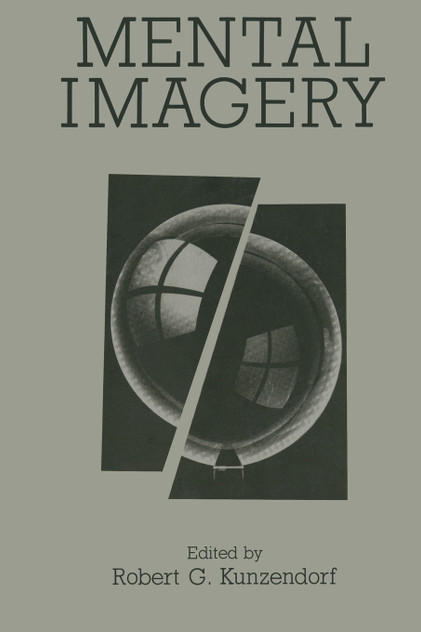
The current book presents select proceedings from the Eleventh Annual Conference of AASMI (The American Association for the Study of Mental Imagery) in Washington, DC, 1989, and from the Twelfth...
Mental Imagery (1898) is a book written by Wilfrid Lay that explores the concept of mental imagery and its role in human perception and cognition. The book is divided into three parts, with the first...
This work has been selected by scholars as being culturally important, and is part of the knowledge base of civilization as we know it.This work is in the "public domain in the United States of...
The Encyclopedia of Mental Imagery contains over 2,100 original mental imagery exercises drawn from the work of the great 20th century spiritual master and healer, Colette Aboulker-Muscat. It is...
Discover your next great read at BookLoop, Australiand online bookstore offering a vast selection of titles across various genres and interests. Whether you're curious about what's trending or searching for graphic novels that captivate, thrilling crime and mystery fiction, or exhilarating action and adventure stories, our curated collections have something for every reader. Delve into imaginative fantasy worlds or explore the realms of science fiction that challenge the boundaries of reality. Fans of contemporary narratives will find compelling stories in our contemporary fiction section. Embark on epic journeys with our fantasy and science fiction titles,
Shop Trending Books and New Releases
Explore our new releases for the most recent additions in romance books, fantasy books, graphic novels, crime and mystery books, science fiction books as well as biographies, cookbooks, self help books, tarot cards, fortunetelling and much more. With titles covering current trends, booktok and bookstagram recommendations, and emerging authors, BookLoop remains your go-to local australian bookstore for buying books online across all book genres.
Shop Best Books By Collection
Stay updated with the literary world by browsing our trending books, featuring the latest bestsellers and critically acclaimed works. Explore titles from popular brands like Minecraft, Pokemon, Star Wars, Bluey, Lonely Planet, ABIA award winners, Peppa Pig, and our specialised collection of ADHD books. At BookLoop, we are committed to providing a diverse and enriching reading experience for all.
Sign In
your cart
Your cart is empty
Menu
Search
PRE-SALES
If you have any questions before making a purchase chat with our online operators to get more information.