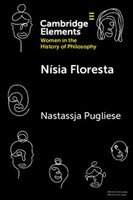
This Element presents the philosophical contributions of Nísia Floresta, a feminist philosopher of education from the 19th century in early post-colonial Brazil, who defended abolition and indigenous rights. Focusing on five central works (Direitos, Lágrima, Opúsculo, Páginas, and Woman), it shows them connected by a critique of colonialism grounded on feminist principles. Influenced by the practical Cartesianism of Poulain de la Barre through the pamphlets of Sophia, Floresta applies to the social structures the feminist principle that reason has no gender, arguing that a nation's civilizational level depends on whether natural equality is expressed in terms of social rights. Describing the suffering experienced by women, indigenous people, and the black enslaved population, she defends education as a strategy against colonialism. As such, education should aim towards physical and intellectual emancipation, restoring the lost dignity of individuals. Floresta's works thus foreground slavery and colonization as events that shaped philosophical modernity.
This is an EXACT reproduction of a book published before 1923. This IS NOT an OCR'd book with strange characters, introduced typographical errors, and jumbled words. This book may have occasional...
Floresta V2: Evangelica, Y Sagrada, Plantada, Y Sembrada De Varias Plantas, Y Flores, De Sermones Varios Festivos, A Diferentes Assumptos (1694) es un libro escrito por Maria, Bernardo De Jesus. Se...
Eighteen years have now passed since the Phantom Wolf, Sia, faced her greatest challenge when she was forced to kill her lover, Kiba--the rightful heir to the throne. Sia murdered the dishonorable...
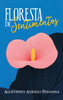
Floresta de Sentimentos by Agostinho Adrego Pessanha offers readers a poetic journey where nature and human emotions come together in harmony. Through carefully crafted poems, Pessanha captures...
This is a reproduction of a book published before 1923. This book may have occasional imperfections such as missing or blurred pages, poor pictures, errant marks,...