Muscle contraction has been the focus of scientific investigation for more than two centuries, and major discoveries have changed the field over the years. Early in the twentieth century, Fenn (1924, 1923) showed that the total energy liberated during a contraction (heat + work) was increased when the muscle was allowed to shorten and perform work. The result implied that chemical reactions during contractions were load-dependent. The observation underlying the "Fenn effect" was taken to a greater extent when Hill (1938) published a pivotal study showing in details the relation between heat production and the amount of muscle shortening, providing investigators with the force-velocity relation for skeletal muscles. Subsequently, two papers paved the way for the current paradigm in the field of muscle contraction. Huxley and Niedergerke (1954), and Huxley and Hanson (1954) showed that the width of the A-bands did not change during muscle stretch or activation. Contraction, previously believed to be caused by shortening of muscle filaments, was associated with sliding of the thick and thin filaments. These studies were followed by the classic paper by Huxley (1957), in which he conceptualized for the first time the cross-bridge theory; filament sliding was driven by the cyclical interactions of myosin heads (cross-bridges) with actin. The original cross-bridge theory has been revised over the years but the basic features have remained mostly intact. It now influences studies performed with molecular motors responsible for tasks as diverse as muscle contraction, cell division and vesicle transport.
Muscle contraction has been the focus of scientific investigation for more than two centuries, and major discoveries have changed the field over the years. Early in the twentieth century, Fenn (1924, 1923) showed that the total energy liberated during a contraction (heat + work) was increased when the muscle was allowed to shorten and perform work. The result implied that chemical reactions during contractions were load-dependent. The observation underlying the "Fenn effect" was taken to a greater extent when Hill (1938) published a pivotal study showing in details the relation between heat production and the amount of muscle shortening, providing investigators with the force-velocity relation for skeletal muscles. Subsequently, two papers paved the way for the current paradigm in the field of muscle contraction. Huxley and Niedergerke (1954), and Huxley and Hanson (1954) showed that the width of the A-bands did not change during muscle stretch or activation. Contraction, previously believed to be caused by shortening of muscle filaments, was associated with sliding of the thick and thin filaments. These studies were followed by the classic paper by Huxley (1957), in which he conceptualized for the first time the cross-bridge theory; filament sliding was driven by the cyclical interactions of myosin heads (cross-bridges) with actin. The original cross-bridge theory has been revised over the years but the basic features have remained mostly intact. It now influences studies performed with molecular motors responsible for tasks as diverse as muscle contraction, cell division and vesicle transport.
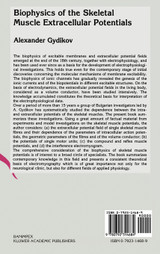
The biophysics of excitable membranes and extracellular potential .fields emerged at the end of the 18th century, together with electrophysiology. and has been used ever since as a basis for the...
Gain a deeper understanding of the human body and its intricate mechanisms with this comprehensive guide to the action of muscles. From rest to re-education, this book covers it all, providing a...
Discover your next great read at BookLoop, Australiand online bookstore offering a vast selection of titles across various genres and interests. Whether you're curious about what's trending or searching for graphic novels that captivate, thrilling crime and mystery fiction, or exhilarating action and adventure stories, our curated collections have something for every reader. Delve into imaginative fantasy worlds or explore the realms of science fiction that challenge the boundaries of reality. Fans of contemporary narratives will find compelling stories in our contemporary fiction section. Embark on epic journeys with our fantasy and science fiction titles,
Shop Trending Books and New Releases
Explore our new releases for the most recent additions in romance books, fantasy books, graphic novels, crime and mystery books, science fiction books as well as biographies, cookbooks, self help books, tarot cards, fortunetelling and much more. With titles covering current trends, booktok and bookstagram recommendations, and emerging authors, BookLoop remains your go-to local australian bookstore for buying books online across all book genres.
Shop Best Books By Collection
Stay updated with the literary world by browsing our trending books, featuring the latest bestsellers and critically acclaimed works. Explore titles from popular brands like Minecraft, Pokemon, Star Wars, Bluey, Lonely Planet, ABIA award winners, Peppa Pig, and our specialised collection of ADHD books. At BookLoop, we are committed to providing a diverse and enriching reading experience for all.
Sign In
your cart
Your cart is empty
Menu
Search
PRE-SALES
If you have any questions before making a purchase chat with our online operators to get more information.