For nearly half a century multiculturism has existed as a substrate beneath liberal thought in Europe and the United States. During this span of time that concept has been employed in academic and governmental circles to justify our friendly relations with a Third World- despite the fact that a majority of the countries comprising that undeveloped section of the globe are inimical if not downright hostile to democracy, to justice under law and to the idea of human rights. Yet, multiculturism is hardly identified as a rationale in the determining of our foreign policy; indeed, we, as a people, are largely unaware of its often baleful presence. This is particularly so in our relationship with the countries of the Middle East. Even allowing for other factors, this post-modern pattern of thought has largely been responsible for our failure to achieve a policy that appropriately deals with countries whose governments remain autocratic and repressive to their own peoples and under whose protection terrorists now threaten the United States.I have written Multiculturism, America and the Middle East to make Americans aware of the often malign character and impact of this still fashionable doctrine across the liberal spectrum. In the process I have initially dwelt at some length on its anthropological origins, and the moral contradictions which it has raised in the minds of otherwise ethical people. Because multiculturism is a major component of post-modern philosophy, I also give attention to that mode of thought, with its championing of supra-nationalism and cultural relativism, as undercutting our basic political and moral principles and, indeed, our very view of the past. A direct outgrowth of these trends has been the corruption of a United Nations that was originally created to provide a common ground where the less developed could meet with the more developed countries to advance the welfare of the former and contribute peacefully to the solution of the world's problems. Instead, influenced by transcendent universalist tendencies, the United States and the democracies of Europe have allowed themselves to be impressed by the often unprincipled mind-set of much of the Third World, whose emissaries to the U.N. have transferred its frequently venal attitudes and actions to its New York headquarters.
For nearly half a century multiculturism has existed as a substrate beneath liberal thought in Europe and the United States. During this span of time that concept has been employed in academic and governmental circles to justify our friendly relations with a Third World- despite the fact that a majority of the countries comprising that undeveloped section of the globe are inimical if not downright hostile to democracy, to justice under law and to the idea of human rights. Yet, multiculturism is hardly identified as a rationale in the determining of our foreign policy; indeed, we, as a people, are largely unaware of its often baleful presence. This is particularly so in our relationship with the countries of the Middle East. Even allowing for other factors, this post-modern pattern of thought has largely been responsible for our failure to achieve a policy that appropriately deals with countries whose governments remain autocratic and repressive to their own peoples and under whose protection terrorists now threaten the United States.I have written Multiculturism, America and the Middle East to make Americans aware of the often malign character and impact of this still fashionable doctrine across the liberal spectrum. In the process I have initially dwelt at some length on its anthropological origins, and the moral contradictions which it has raised in the minds of otherwise ethical people. Because multiculturism is a major component of post-modern philosophy, I also give attention to that mode of thought, with its championing of supra-nationalism and cultural relativism, as undercutting our basic political and moral principles and, indeed, our very view of the past. A direct outgrowth of these trends has been the corruption of a United Nations that was originally created to provide a common ground where the less developed could meet with the more developed countries to advance the welfare of the former and contribute peacefully to the solution of the world's problems. Instead, influenced by transcendent universalist tendencies, the United States and the democracies of Europe have allowed themselves to be impressed by the often unprincipled mind-set of much of the Third World, whose emissaries to the U.N. have transferred its frequently venal attitudes and actions to its New York headquarters.
Authors Richard W. Mansbach and Kirsten L. Taylor examine Middle Eastern issues from a historical perspective and in the context of the current state of affairs, and analyze options for future action...
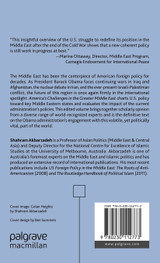
The Middle East has been the centerpiece of American foreign policy for decades. As President Barack Obama faces continuing wars in Iraq and Afghanistan, the nuclear debate in Iran and the...
To ask about the nature of practice-based film education as it has emerged around the globe and exists today, is to begin to understand how filmmakers become filmmakers of a particular kind, with...
Discover your next great read at BookLoop, Australiand online bookstore offering a vast selection of titles across various genres and interests. Whether you're curious about what's trending or searching for graphic novels that captivate, thrilling crime and mystery fiction, or exhilarating action and adventure stories, our curated collections have something for every reader. Delve into imaginative fantasy worlds or explore the realms of science fiction that challenge the boundaries of reality. Fans of contemporary narratives will find compelling stories in our contemporary fiction section. Embark on epic journeys with our fantasy and science fiction titles,
Shop Trending Books and New Releases
Explore our new releases for the most recent additions in romance books, fantasy books, graphic novels, crime and mystery books, science fiction books as well as biographies, cookbooks, self help books, tarot cards, fortunetelling and much more. With titles covering current trends, booktok and bookstagram recommendations, and emerging authors, BookLoop remains your go-to local australian bookstore for buying books online across all book genres.
Shop Best Books By Collection
Stay updated with the literary world by browsing our trending books, featuring the latest bestsellers and critically acclaimed works. Explore titles from popular brands like Minecraft, Pokemon, Star Wars, Bluey, Lonely Planet, ABIA award winners, Peppa Pig, and our specialised collection of ADHD books. At BookLoop, we are committed to providing a diverse and enriching reading experience for all.
Sign In
your cart
Your cart is empty
Menu
Search
PRE-SALES
If you have any questions before making a purchase chat with our online operators to get more information.