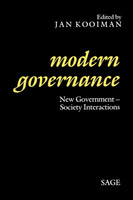
This text chronicles the reaction against the 1980s tendency for governments to opt out and leave social change to market forces, and the return of some West European governments to an interaction with concerned sections of society to cope with difficult problems and create new opportunites. It explores recent ventures in public-private interactions, in terms of different interactive arrangements, such as co-production, co-regulation, co-allocation or co-management. In explaining these forms of interaction in terms of coping with the dynamics, complexities and diversity of modern society, it delineates a theory of social-political governance. The 17 chapters provide empirical examples from eight West European countries, as well as theoretical formulations, which explain these recent forms of governance and provide challenging prospects for modern public management. This text is suitable for students and academics in political science, organization theory, public administration and management, as well as professional in politics and public administration.