When, forty years ago, as a student of Charles Coulson in Oxford I began work in theoretical chemistry, I was provided with a Brunsviga calculator-a small mechanical device with a handle for propulsion, metal levers for setting the numbers, and a bell that rang to indicate overflow. What has since come to be known as computational chemistry was just beginning. There followed a long period in which the fundamental theory of the "golden age" (1925-1935) was extended and refined and in which the dreams of the early practitioners were gradually turned into hard arithmetic reality. As a still-computing survivor from the early postwar days now enjoying the benefits of unbelievably improved hardware, I am glad to contribute a foreword to this series and to have the opportunity of providing a little historical perspective. After the Brunsviga came the electromechanical machines of the late 1940s and early 1950s, and a great reduction in the burden of calculating molecular wavefunctions. We were now happy. At least for systems con taining a few electrons it was possible to make fully ab initio calculations, even though semiempirical models remained indispensable for most molecules of everyday interest. The 1950 papers of Hall and of Roothaan represented an important milestone along the road to larger-scale non empirical calculations, extending the prewar work of Hartree and Fock from many-electron atoms to many-electron molecules-and thus into "real chemistry.
When, forty years ago, as a student of Charles Coulson in Oxford I began work in theoretical chemistry, I was provided with a Brunsviga calculator-a small mechanical device with a handle for propulsion, metal levers for setting the numbers, and a bell that rang to indicate overflow. What has since come to be known as computational chemistry was just beginning. There followed a long period in which the fundamental theory of the "golden age" (1925-1935) was extended and refined and in which the dreams of the early practitioners were gradually turned into hard arithmetic reality. As a still-computing survivor from the early postwar days now enjoying the benefits of unbelievably improved hardware, I am glad to contribute a foreword to this series and to have the opportunity of providing a little historical perspective. After the Brunsviga came the electromechanical machines of the late 1940s and early 1950s, and a great reduction in the burden of calculating molecular wavefunctions. We were now happy. At least for systems con taining a few electrons it was possible to make fully ab initio calculations, even though semiempirical models remained indispensable for most molecules of everyday interest. The 1950 papers of Hall and of Roothaan represented an important milestone along the road to larger-scale non empirical calculations, extending the prewar work of Hartree and Fock from many-electron atoms to many-electron molecules-and thus into "real chemistry.
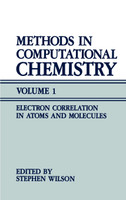
The papers collected in this volume were presented at an international symposium on Computational Methods in Chemistry. This symposium was sponsored by IBM Germany and was held September 17-19, 1979,...
This book provides a comprehensive account, from first principles, of the methods of numerical quantum mechanics, beginning with formulations and fundamental postulates. The development continues...
Discover your next great read at BookLoop, Australiand online bookstore offering a vast selection of titles across various genres and interests. Whether you're curious about what's trending or searching for graphic novels that captivate, thrilling crime and mystery fiction, or exhilarating action and adventure stories, our curated collections have something for every reader. Delve into imaginative fantasy worlds or explore the realms of science fiction that challenge the boundaries of reality. Fans of contemporary narratives will find compelling stories in our contemporary fiction section. Embark on epic journeys with our fantasy and science fiction titles,
Shop Trending Books and New Releases
Explore our new releases for the most recent additions in romance books, fantasy books, graphic novels, crime and mystery books, science fiction books as well as biographies, cookbooks, self help books, tarot cards, fortunetelling and much more. With titles covering current trends, booktok and bookstagram recommendations, and emerging authors, BookLoop remains your go-to local australian bookstore for buying books online across all book genres.
Shop Best Books By Collection
Stay updated with the literary world by browsing our trending books, featuring the latest bestsellers and critically acclaimed works. Explore titles from popular brands like Minecraft, Pokemon, Star Wars, Bluey, Lonely Planet, ABIA award winners, Peppa Pig, and our specialised collection of ADHD books. At BookLoop, we are committed to providing a diverse and enriching reading experience for all.
Sign In
your cart
Your cart is empty
Menu
Search
PRE-SALES
If you have any questions before making a purchase chat with our online operators to get more information.