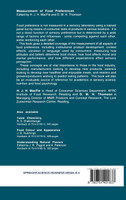
1 A measurement scheme for developing institutional products.- 1.1 Introduction.- 1.2 Phase I. Consumer marketing.- 1.2.1 Whom to test.- 1.2.2 What to test.- 1.2.3 How to test.- 1.3 Phase II. Individual item sensory testing.- 1.3.1 Trained and consumer panels.- 1.3.2 Choice of rating scales.- 1.4 Phase III. Consumer meal testing - laboratory.- 1.4.1 What is a meal?.- 1.4.2 Acceptance and consumption.- 1.5 Phase IV. Consumer meal testing - field.- 1.5.1 Realism.- 1.5.2 Test population.- 1.5.3 Adhering to test protocol.- 1.5.4 Item and meal acceptance.- 1.6 Phase V. Prototype testing.- 1.7 Phase VI. Extended ration use validation.- 1.8 Phase VII. Quality control testing.- 1.9 How to use the seven-phase testing sequences.- References.- 2 Appropriateness as a measure of the cognitive-contextual aspects of food acceptance.- 2.1 Introduction.- 2.2 Description of procedures for appropriateness, item by use technique.- 2.2.1 Selection of stimuli.- 2.2.2 Format of the questionnaire.- 2.2.3 Selection of respondents.- 2.2.4 Collection of non-appropriateness data.- 2.2.5 Data collection.- 2.2.6 Analysis of appropriateness data.- 2.2.7 Use of principal component analysis.- 2.2.8 Analyses with non-appropriateness data.- 2.3 Conclusions.- References.- 3 The repertory grid approach.- 3.1 Introduction.- 3.1.1 Food choice.- 3.1.2 Personal construct theory.- 3.2 Methodology.- 3.2.1 Repertory grid method.- 3.2.2 Statistical analysis of repertory grids.- 3.2.3 Generalised Procrustes analysis.- 3.3 Application.- 3.3.1 The different aspects of food choice.- 3.3.2 Investigating the food: general perceptions, sensory characteristics and reasons for choice.- 3.3.3 Investigating consumers.- 3.3.4 Investigating contexts of use.- 3.3.5 Interaction of foods, consumers and context of use.- 3.3.6 Extending repertory grid methodology: laddering, preference mapping and other procedures.- 3.4 Conclusions.- References.- 4 Focus group interviewing.- 4.1 Introduction.- 4.1.1 Advantages and limitations of focus groups.- 4.1.2 Myths about focus groups.- 4.2 The process of conducting focus groups.- 4.2.1 Designing a study.- 4.2.2 Developing the questioning route.- 4.2.3 Recruiting participants.- 4.2.4 Moderating.- 4.2.5 Analysis.- 4.2.6 Validity and reliability - Can we really trust this stuff?.- 4.3 Summary.- References.- 5 Product optimization: approaches and applications.- 5.1 Background and applications.- 5.1.1 What is product optimization?.- 5.1.2 Historical background.- 5.2 Steps in a designed experiment and product optimization study.- 5.2.1 Selection of variables and their levels - systematic versus haphazard designs.- 5.2.2 Questionnaire development.- 5.2.3 Test implementation.- 5.2.4 Analysis of the data - a multi-step process.- 5.3 A case history - salsa.- 5.3.1 Experimental design.- 5.3.2 Results.- 5.3.3 Analysis phase 1, R-R analysis.- 5.3.4 Analysis phase 2, S-R (stimulus-response) analysis.- 5.3.5 Three examples of optimization technology.- 5.4 An overview.- References.- 6 Preference mapping in practice.- 6.1 Introduction.- 6.1.1 An alternative approach.- 6.2 External preference analysis - Prefmap.- 6.2.1 The method.- 6.2.2 Case study using external analysis.- 6.2.3 Problems with external preference mapping.- 6.3 Internal analysis - MDPREF.- 6.3.1 Method.- 6.3.2 Case study using internal analysis.- 6.4 Advantages and limitations of preference mapping.- 6.5 Aspects of conduct.- References.- 7 An individualised psychological approach to measuring influences on consumer preferences.- 7.1 Introduction.- 7.2 Measuring individual consumer preferences.- 7.2.1 Acquisition of food preferences.- 7.2.2 Relating determinants to food preferences: the acceptance triangle.- 7.2.3 Principles of consumer preference measurement.- 7.3 Psychophysical acceptance parameters.- 7.3.1 Ideal point (IP).- 7.3.2 Rejections ratio (RR).- 7.3.3 Tolerance discrimination ratio (TDR).- 7.4 Aggregation of individuals' acceptance parameters.- 7.5 Measuring determinants of acceptance i...
1 A measurement scheme for developing institutional products.- 1.1 Introduction.- 1.2 Phase I. Consumer marketing.- 1.2.1 Whom to test.- 1.2.2 What to test.- 1.2.3 How to test.- 1.3 Phase II. Individual item sensory testing.- 1.3.1 Trained and consumer panels.- 1.3.2 Choice of rating scales.- 1.4 Phase III. Consumer meal testing - laboratory.- 1.4.1 What is a meal?.- 1.4.2 Acceptance and consumption.- 1.5 Phase IV. Consumer meal testing - field.- 1.5.1 Realism.- 1.5.2 Test population.- 1.5.3 Adhering to test protocol.- 1.5.4 Item and meal acceptance.- 1.6 Phase V. Prototype testing.- 1.7 Phase VI. Extended ration use validation.- 1.8 Phase VII. Quality control testing.- 1.9 How to use the seven-phase testing sequences.- References.- 2 Appropriateness as a measure of the cognitive-contextual aspects of food acceptance.- 2.1 Introduction.- 2.2 Description of procedures for appropriateness, item by use technique.- 2.2.1 Selection of stimuli.- 2.2.2 Format of the questionnaire.- 2.2.3 Selection of respondents.- 2.2.4 Collection of non-appropriateness data.- 2.2.5 Data collection.- 2.2.6 Analysis of appropriateness data.- 2.2.7 Use of principal component analysis.- 2.2.8 Analyses with non-appropriateness data.- 2.3 Conclusions.- References.- 3 The repertory grid approach.- 3.1 Introduction.- 3.1.1 Food choice.- 3.1.2 Personal construct theory.- 3.2 Methodology.- 3.2.1 Repertory grid method.- 3.2.2 Statistical analysis of repertory grids.- 3.2.3 Generalised Procrustes analysis.- 3.3 Application.- 3.3.1 The different aspects of food choice.- 3.3.2 Investigating the food: general perceptions, sensory characteristics and reasons for choice.- 3.3.3 Investigating consumers.- 3.3.4 Investigating contexts of use.- 3.3.5 Interaction of foods, consumers and context of use.- 3.3.6 Extending repertory grid methodology: laddering, preference mapping and other procedures.- 3.4 Conclusions.- References.- 4 Focus group interviewing.- 4.1 Introduction.- 4.1.1 Advantages and limitations of focus groups.- 4.1.2 Myths about focus groups.- 4.2 The process of conducting focus groups.- 4.2.1 Designing a study.- 4.2.2 Developing the questioning route.- 4.2.3 Recruiting participants.- 4.2.4 Moderating.- 4.2.5 Analysis.- 4.2.6 Validity and reliability - Can we really trust this stuff?.- 4.3 Summary.- References.- 5 Product optimization: approaches and applications.- 5.1 Background and applications.- 5.1.1 What is product optimization?.- 5.1.2 Historical background.- 5.2 Steps in a designed experiment and product optimization study.- 5.2.1 Selection of variables and their levels - systematic versus haphazard designs.- 5.2.2 Questionnaire development.- 5.2.3 Test implementation.- 5.2.4 Analysis of the data - a multi-step process.- 5.3 A case history - salsa.- 5.3.1 Experimental design.- 5.3.2 Results.- 5.3.3 Analysis phase 1, R-R analysis.- 5.3.4 Analysis phase 2, S-R (stimulus-response) analysis.- 5.3.5 Three examples of optimization technology.- 5.4 An overview.- References.- 6 Preference mapping in practice.- 6.1 Introduction.- 6.1.1 An alternative approach.- 6.2 External preference analysis - Prefmap.- 6.2.1 The method.- 6.2.2 Case study using external analysis.- 6.2.3 Problems with external preference mapping.- 6.3 Internal analysis - MDPREF.- 6.3.1 Method.- 6.3.2 Case study using internal analysis.- 6.4 Advantages and limitations of preference mapping.- 6.5 Aspects of conduct.- References.- 7 An individualised psychological approach to measuring influences on consumer preferences.- 7.1 Introduction.- 7.2 Measuring individual consumer preferences.- 7.2.1 Acquisition of food preferences.- 7.2.2 Relating determinants to food preferences: the acceptance triangle.- 7.2.3 Principles of consumer preference measurement.- 7.3 Psychophysical acceptance parameters.- 7.3.1 Ideal point (IP).- 7.3.2 Rejections ratio (RR).- 7.3.3 Tolerance discrimination ratio (TDR).- 7.4 Aggregation of individuals' acceptance parameters.- 7.5 Measuring determinants of acceptance i...
Measurements of individual benefits of different health and medical interventions are fundamental for prioritizing among different alternative uses of resources in the healthcare sector. While...
Food preferences and tastes are among the fundamentals affecting human existence; the sociocultural, physiological and neurological factors involved have therefore been widely researched and are well...
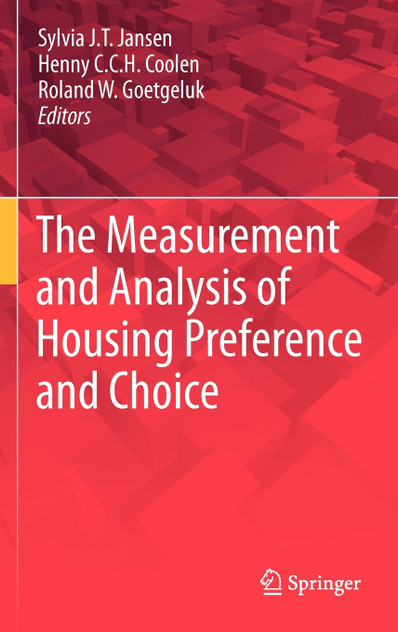
1: Introduction: Sylvia Jansen, Henny Coolen, Roland Goetgeluk, 2: Traditional Housing Demand Research: Harry Boumeester, 3: The Decision Plan Net method: Roland Goetgeluk, 4: The Meaning Structure...
The acceptance and preference of the sensory properties of foods are among the most important criteria determining food choice. Sensory perception and our response to food products, and finally food...
Discover your next great read at BookLoop, Australiand online bookstore offering a vast selection of titles across various genres and interests. Whether you're curious about what's trending or searching for graphic novels that captivate, thrilling crime and mystery fiction, or exhilarating action and adventure stories, our curated collections have something for every reader. Delve into imaginative fantasy worlds or explore the realms of science fiction that challenge the boundaries of reality. Fans of contemporary narratives will find compelling stories in our contemporary fiction section. Embark on epic journeys with our fantasy and science fiction titles,
Shop Trending Books and New Releases
Explore our new releases for the most recent additions in romance books, fantasy books, graphic novels, crime and mystery books, science fiction books as well as biographies, cookbooks, self help books, tarot cards, fortunetelling and much more. With titles covering current trends, booktok and bookstagram recommendations, and emerging authors, BookLoop remains your go-to local australian bookstore for buying books online across all book genres.
Shop Best Books By Collection
Stay updated with the literary world by browsing our trending books, featuring the latest bestsellers and critically acclaimed works. Explore titles from popular brands like Minecraft, Pokemon, Star Wars, Bluey, Lonely Planet, ABIA award winners, Peppa Pig, and our specialised collection of ADHD books. At BookLoop, we are committed to providing a diverse and enriching reading experience for all.
Sign In
your cart
Your cart is empty
Menu
Search
PRE-SALES
If you have any questions before making a purchase chat with our online operators to get more information.