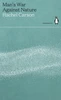
Judith Shapiro, in clear and compelling prose, relates the great, untold story of the devastating impact of Chinese politics on China's environment during the Mao years. Maoist China provides an example of extreme human interference in the natural world in an era in which human relationships were also unusually distorted. Under Mao, the traditional Chinese ideal of 'harmony between heaven and humans' was abrogated in favor of Mao's insistence that 'People Will Conquer Nature'. Mao and the Chinese Communist Party's 'war' to bend the physical world to human will often had disastrous consequences both for human beings and the natural environment. Mao's War Against Nature argues that the abuse of people and the abuse of nature are often linked. Shapiro's account, told in part through the voices of average Chinese citizens and officials who lived through and participated in some of the destructive campaigns, is both eye-opening and heartbreaking.
In 20 short books, Penguin Classics brings you the new canon of great environmental worksOver the past 75 years, a new canon has emerged. As humans have driven the living planet to the brink of...
This book examines relations between China and the Soviet Union during the 1950s, and provides an insight into Chinese thinking about the Korean War.This volume is based on a translation of Shen...
How People's Republic of China interacts with the United States will partly determine the world's order in the 21st century. The Korean War-the only time that China confronted the U.S.-remains a rich...
Nelson Maldonado-Torres argues that European modernity has become inextricably linked with the experience of the warrior and conqueror. In Against War, he develops a powerful critique of modernity,...
This work has been selected by scholars as being culturally important and is part of the knowledge base of civilization as we know it.This work is in the public domain in the United States of...