Trending Bestseller

Making Multiracials

Kimberly McClain DaCosta

No reviews yet Write a Review
Paperback / softback
280 Pages
$54.00
Ships in 3-5 business days
Hurry up! Current stock:

When in 1997 golfer Tiger Woods described his racial identity on Oprah as "cablinasian," it struck many as idiosyncratic. But by 2003, a New York Times article declared the arrival of "Generation E.A."-the ethnically ambiguous. Multiracial had become a recognizable social category for a large group of Americans.

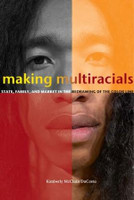
Making Multiracials tells the story of the social movement that emerged around mixed race identity in the 1990s. Organizations for interracial families and mixed race people-groups once loosely organized and only partially aware of each other-proliferated. What was once ignored, treated as taboo, or just thought not to exist quickly became part of the cultural mainstream.

How did this category of people come together? Why did the movement develop when it did? What is it about ""being mixed"" that constitutes a compelling basis for activism? Drawing on extensive interviews and fieldwork, the author answers these questions to show how multiracials have been ""made"" through state policy, family organizations, and market forces.

"

This product hasn't received any reviews yet. Be the first to review this product!

$54.00
Ships in 3-5 business days
Hurry up! Current stock:

Making Multiracials

$54.00

Description

When in 1997 golfer Tiger Woods described his racial identity on Oprah as "cablinasian," it struck many as idiosyncratic. But by 2003, a New York Times article declared the arrival of "Generation E.A."-the ethnically ambiguous. Multiracial had become a recognizable social category for a large group of Americans.

Making Multiracials tells the story of the social movement that emerged around mixed race identity in the 1990s. Organizations for interracial families and mixed race people-groups once loosely organized and only partially aware of each other-proliferated. What was once ignored, treated as taboo, or just thought not to exist quickly became part of the cultural mainstream.

How did this category of people come together? Why did the movement develop when it did? What is it about ""being mixed"" that constitutes a compelling basis for activism? Drawing on extensive interviews and fieldwork, the author answers these questions to show how multiracials have been ""made"" through state policy, family organizations, and market forces.

"

Customers Also Viewed