"All my actions have their source in my inalienable love of humankind." -- Gandhi
Mahatma Gandhi is one of the least understood figures of all time -- even among his admirers. In this Annual Gandhi Lecture for the International Association of Gandhian Studies, Mark Shepard tackles some persistently wrong-headed views of Gandhi, offering us a more accurate picture of the man and his nonviolence.
////////////////////////////////////////////////
"A model of Gandhian journalism. . . . [Shepard] has put his finger on seemingly all of the popular (and some less common) misconceptions of both Gandhi and his philosophy, including some particularly important ones. . . . This book takes little space to cover its topic concisely and well. It would be [some] of the most valuable pages many people could read about Gandhi." -- Global Conscience, July-Sept. 1990
////////////////////////////////////////////////
Mark Shepard is the author of "Mahatma Gandhi and His Myths," "The Community of the Ark," and "Gandhi Today," called by the American Library Association's Booklist "a masterpiece of committed reporting." His writings on social alternatives have appeared in over 30 publications in the United States, Canada, England, Norway, Germany, the Netherlands, Switzerland, Japan, and India.
////////////////////////////////////////////////
SAMPLE
I suspect that most of the myths and misconceptions surrounding Gandhi have to do with nonviolence. For instance, it's surprising how many people still have the idea that nonviolent action is passive.
It's important for us to be clear about this: There is nothing passive about Gandhian nonviolent action.
I'm afraid Gandhi himself helped create this confusion by referring to his method at first as "passive resistance," because it was in some ways like techniques bearing that label. But he soon changed his mind and rejected the term.
Gandhi's nonviolent action was not an evasive strategy nor a defensive one. Gandhi was always on the offensive. He believed in confronting his opponents aggressively, in such a way that they could not avoid dealing with him.
But wasn't Gandhi's nonviolent action designed to avoid violence? Yes and no. Gandhi steadfastly avoided violence toward his opponents. He did not avoid violence toward himself or his followers.
Gandhi said that the nonviolent activist, like any soldier, had to be ready to die for the cause. And in fact, during India's struggle for independence, hundreds of Indians were killed by the British.
The difference was that the nonviolent activist, while willing to die, was never willing to kill.
Gandhi pointed out three possible responses to oppression and injustice. One he described as the coward's way: to accept the wrong or run away from it. The second option was to stand and fight by force of arms. Gandhi said this was better than acceptance or running away.
But the third way, he said, was best of all and required the most courage: to stand and fight solely by nonviolent means.
"All my actions have their source in my inalienable love of humankind." -- Gandhi
Mahatma Gandhi is one of the least understood figures of all time -- even among his admirers. In this Annual Gandhi Lecture for the International Association of Gandhian Studies, Mark Shepard tackles some persistently wrong-headed views of Gandhi, offering us a more accurate picture of the man and his nonviolence.
////////////////////////////////////////////////
"A model of Gandhian journalism. . . . [Shepard] has put his finger on seemingly all of the popular (and some less common) misconceptions of both Gandhi and his philosophy, including some particularly important ones. . . . This book takes little space to cover its topic concisely and well. It would be [some] of the most valuable pages many people could read about Gandhi." -- Global Conscience, July-Sept. 1990
////////////////////////////////////////////////
Mark Shepard is the author of "Mahatma Gandhi and His Myths," "The Community of the Ark," and "Gandhi Today," called by the American Library Association's Booklist "a masterpiece of committed reporting." His writings on social alternatives have appeared in over 30 publications in the United States, Canada, England, Norway, Germany, the Netherlands, Switzerland, Japan, and India.
////////////////////////////////////////////////
SAMPLE
I suspect that most of the myths and misconceptions surrounding Gandhi have to do with nonviolence. For instance, it's surprising how many people still have the idea that nonviolent action is passive.
It's important for us to be clear about this: There is nothing passive about Gandhian nonviolent action.
I'm afraid Gandhi himself helped create this confusion by referring to his method at first as "passive resistance," because it was in some ways like techniques bearing that label. But he soon changed his mind and rejected the term.
Gandhi's nonviolent action was not an evasive strategy nor a defensive one. Gandhi was always on the offensive. He believed in confronting his opponents aggressively, in such a way that they could not avoid dealing with him.
But wasn't Gandhi's nonviolent action designed to avoid violence? Yes and no. Gandhi steadfastly avoided violence toward his opponents. He did not avoid violence toward himself or his followers.
Gandhi said that the nonviolent activist, like any soldier, had to be ready to die for the cause. And in fact, during India's struggle for independence, hundreds of Indians were killed by the British.
The difference was that the nonviolent activist, while willing to die, was never willing to kill.
Gandhi pointed out three possible responses to oppression and injustice. One he described as the coward's way: to accept the wrong or run away from it. The second option was to stand and fight by force of arms. Gandhi said this was better than acceptance or running away.
But the third way, he said, was best of all and required the most courage: to stand and fight solely by nonviolent means.
Gandhi (Little People, Big Dreams) tells the inspiring story of this peaceful protester and father of India. As a young teenager in India, Gandhi led a rebellious life and went against his...
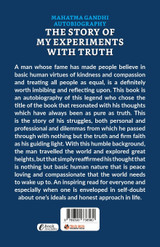
A man whose fame has made people believe in basic human virtues of kindness and compassion and treating all people as equal, is a definitely worth imbibing and reflecting upon. This book is an...
Discover your next great read at BookLoop, Australiand online bookstore offering a vast selection of titles across various genres and interests. Whether you're curious about what's trending or searching for graphic novels that captivate, thrilling crime and mystery fiction, or exhilarating action and adventure stories, our curated collections have something for every reader. Delve into imaginative fantasy worlds or explore the realms of science fiction that challenge the boundaries of reality. Fans of contemporary narratives will find compelling stories in our contemporary fiction section. Embark on epic journeys with our fantasy and science fiction titles,
Shop Trending Books and New Releases
Explore our new releases for the most recent additions in romance books, fantasy books, graphic novels, crime and mystery books, science fiction books as well as biographies, cookbooks, self help books, tarot cards, fortunetelling and much more. With titles covering current trends, booktok and bookstagram recommendations, and emerging authors, BookLoop remains your go-to local australian bookstore for buying books online across all book genres.
Shop Best Books By Collection
Stay updated with the literary world by browsing our trending books, featuring the latest bestsellers and critically acclaimed works. Explore titles from popular brands like Minecraft, Pokemon, Star Wars, Bluey, Lonely Planet, ABIA award winners, Peppa Pig, and our specialised collection of ADHD books. At BookLoop, we are committed to providing a diverse and enriching reading experience for all.
Sign In
your cart
Your cart is empty
Menu
Search
PRE-SALES
If you have any questions before making a purchase chat with our online operators to get more information.