A study was conducted that updated methods for estimating the magnitude and frequency of floods in ungaged urban basins in Georgia that are not substantially affected by regulation or tidal fluctuations. Annual peak-flow data for urban streams from September 2008 were analyzed for 50 streamgaging stations (streamgages) in Georgia and 6 streamgages on adjacent urban streams in Florida and South Carolina having 10 or more years of data. Flood-frequency estimates were computed for the 56 urban streamgages by fitting logarithms of annual peak flows for each streamgage to a Pearson Type III distribution. Additionally, basin characteristics for the streamgages were computed by using a geographical information system and computer algorithms. Regional regression analysis, using generalized least-squares regression, was used to develop a set of equations for estimating flows with 50-, 20-, 10-, 4-, 2-, 1-, 0.5-, and 0.2-percent annual exceedance probabilities for ungaged urban basins in Georgia. In addition to the 56 urban streamgages, 171 rural streamgages were included in the regression analysis to maintain continuity between flood estimates for urban and rural basins as the basin characteristics pertaining to urbanization approach zero. Because 21 of the rural streamgages have drainage areas less than 1 square mile, the set of equations developed for this study can also be used for estimating small ungaged rural streams in Georgia. Flood-frequency estimates and basin characteristics for 227 streamgages were combined to form the final database used in the regional regression analysis. Four hydrologic regions were developed for Georgia. The final equations are functions of drainage area and percentage of impervious area for three of the regions and drainage area, percentage of developed land, and mean basin slope for the fourth region. Average standard errors of prediction for these regression equations range from 20.0 to 74.5 percent.
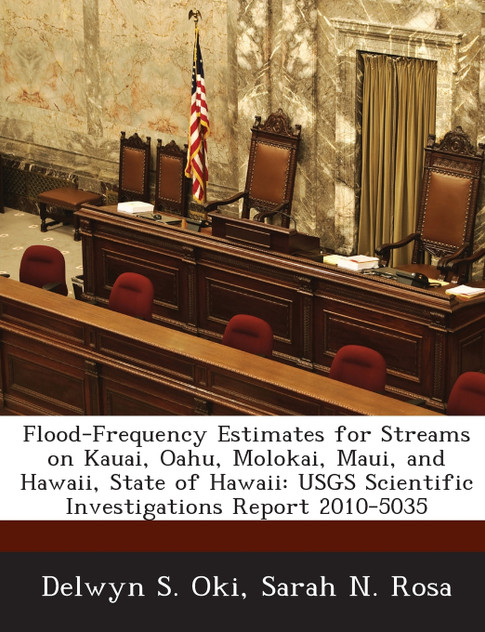
Magnitude and Frequency of Floods for Urban and Small Rural Streams in Georgia, 2008
RRP:
$36.00
Description
A study was conducted that updated methods for estimating the magnitude and frequency of floods in ungaged urban basins in Georgia that are not substantially affected by regulation or tidal fluctuations. Annual peak-flow data for urban streams from September 2008 were analyzed for 50 streamgaging stations (streamgages) in Georgia and 6 streamgages on adjacent urban streams in Florida and South Carolina having 10 or more years of data. Flood-frequency estimates were computed for the 56 urban streamgages by fitting logarithms of annual peak flows for each streamgage to a Pearson Type III distribution. Additionally, basin characteristics for the streamgages were computed by using a geographical information system and computer algorithms. Regional regression analysis, using generalized least-squares regression, was used to develop a set of equations for estimating flows with 50-, 20-, 10-, 4-, 2-, 1-, 0.5-, and 0.2-percent annual exceedance probabilities for ungaged urban basins in Georgia. In addition to the 56 urban streamgages, 171 rural streamgages were included in the regression analysis to maintain continuity between flood estimates for urban and rural basins as the basin characteristics pertaining to urbanization approach zero. Because 21 of the rural streamgages have drainage areas less than 1 square mile, the set of equations developed for this study can also be used for estimating small ungaged rural streams in Georgia. Flood-frequency estimates and basin characteristics for 227 streamgages were combined to form the final database used in the regional regression analysis. Four hydrologic regions were developed for Georgia. The final equations are functions of drainage area and percentage of impervious area for three of the regions and drainage area, percentage of developed land, and mean basin slope for the fourth region. Average standard errors of prediction for these regression equations range from 20.0 to 74.5 percent.
Flood-peak discharge magnitudes and frequencies at streamflow-gaging sites were developed with the annual maximum series (AMS) and the partial duration series (PDS) in this study. Regional equations...
“The whole point was to send a message. If he dies, it’s a bonus.” Nothing is as it seems in the lives of three young and intelligent South African adults who are tirelessly chasing love and...
This study provides an updated analysis of the magnitude and frequency of peak stream discharges in Hawai`i. Annual peak-discharge data collected by the U.S. Geological Survey during and before water...
Discover your next great read at BookLoop, Australiand online bookstore offering a vast selection of titles across various genres and interests. Whether you're curious about what's trending or searching for graphic novels that captivate, thrilling crime and mystery fiction, or exhilarating action and adventure stories, our curated collections have something for every reader. Delve into imaginative fantasy worlds or explore the realms of science fiction that challenge the boundaries of reality. Fans of contemporary narratives will find compelling stories in our contemporary fiction section. Embark on epic journeys with our fantasy and science fiction titles,
Shop Trending Books and New Releases
Explore our new releases for the most recent additions in romance books, fantasy books, graphic novels, crime and mystery books, science fiction books as well as biographies, cookbooks, self help books, tarot cards, fortunetelling and much more. With titles covering current trends, booktok and bookstagram recommendations, and emerging authors, BookLoop remains your go-to local australian bookstore for buying books online across all book genres.
Shop Best Books By Collection
Stay updated with the literary world by browsing our trending books, featuring the latest bestsellers and critically acclaimed works. Explore titles from popular brands like Minecraft, Pokemon, Star Wars, Bluey, Lonely Planet, ABIA award winners, Peppa Pig, and our specialised collection of ADHD books. At BookLoop, we are committed to providing a diverse and enriching reading experience for all.
Sign In
your cart
Your cart is empty
Menu
Search
PRE-SALES
If you have any questions before making a purchase chat with our online operators to get more information.