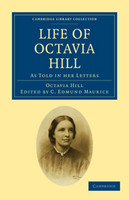
Octavia Hill (1838-1912) is today best remembered as one of the founders of the National Trust. However, her involvement in education and social reform, and particularly housing, was a large part of her work. Shocked at the poverty and overcrowding she found in London slums, she began to acquire and improve properties which would restore the tenants' dignity and self-respect. She organized a team of volunteer 'district visitors' to help the residents, and especially children, to achieve a better quality of life, including the provision of open spaces, training and recreational amenities. She was considerably influenced by Rev. F.D. Maurice, theologian and social worker, whose son, the editor of this work, married Octavia's sister Emily. The letters from which the 'life' is compiled show her extraordinary ability as an organiser, her humanity, and how much effort she put into her various activities, often overworking until she became ill.
Octavia Hill was a key figure in the open spaces and housing movement and one of the founders of the National Trust. Her legacy continues today in the form of many active bodies such as the modern...
This work has been selected by scholars as being culturally important, and is part of the knowledge base of civilization as we know it.This work is in the "public domain in the United States of...
This mysterious and haunting novel tells the story of Octavia, a young girl of mixed race growing up in the antebellum South. With beautiful prose and a gripping plot, this book is a must-read for...