Leo Tolstoy in Conversation with Four Peasant Sectarian Writers
Andrew Donskov takes a critical look not only at Tolstoy's attitude towards the peasant class he so often championed for their simple ways and freedom from upper-class sophistication and pretentiousness, but more importantly, gives voice to representatives of the peasant class itself.
The theme of the peasantry is central throughout most of Tolstoy's long career. His obsession with this class is seen not just as a matter of social or humanitarian concern, but as a response to the questions of "how to live a good life" and "what is the meaning of life that an inevitable death will not destroy?" These questions plagued him his entire life.The letters he exchanged with the four major peasant sectarian writers (Bondarev, Zheltov, Verigin, and Novikov) reveal that Tolstoy was matched as a profound thinker by his correspondents, as they converse on religious-moral questions, the meaning of life and how one should strive to find it, and on a wide array of burning social and personal problems. Reading through the analysis and the extensively annotated letters as a unified whole, elucidates the progressive development of the ideas they shared (and where these diverged) and which guided Tolstoy's and his correspondents' lives.Juxtaposing Tolstoy's letters with those of his four sectarian correspondents makes them even more significant as it shows them in their original context - a dialogue, or conversation. Also, with the aim to present the conversation in an even broader context, Andrew Donskov briefly discusses Tolstoy's relationship with peasants in general as well as with each of the four individual writers in particular. In addition, he provides a background sketch of two major religious groups, namely the Doukhobors and the Molokans, both of which still claim sizeable populations of followers in North America today.Originally published in 2008 by the Slavic Research Group at the University of Ottawa under the title Leo Tolstoy and Russian peasant sectarian writers: Selected correspondence, the expanded University of Ottawa Press edition includes 44 letters never published in English, out of the total 155 letters. Correspondence translated by John Woodsworth.This book is published in English. -La paysannerie traverse la longue carriere de Tolstoi. Son obsession avec cette classe sociale doit etre comprise non seulement comme une preoccupation sociale ou humanitaire, mais aussi comme une reponse aux questions " Comment mener une belle vie? " et " Quel est le sens de la vie que la mort inevitable ne saurait detruire? " qui l'ont hante sa vie durant.La correspondance qu'ont echangee Tolstoi et quatre ecrivains sectaires et lies a la paysannerie (Bondarev, Zheltov, Verigin et Novikov) revele de grands penseurs. Au fil des echanges, les questions de religion et de moralite, du sens de la vie et comment faire pour le decouvrir, et d'une gamme de questions sociales et personnelles du jour sont abordees. La lecture et l'analyse de cet ensemble d'echanges epistolaires enrichis de notes detaillees temoigne du developpement progressif des idees qu'ils partageaient (ainsi que leurs divergences), et qui ont guide la vie de chacun d'entre eux.La juxtaposition des lettres de Tolstoi et de ses quatre correspondants sectaires, qui sont presentees dans leur contexte original de dialogue - ou de conversation - permet d'en pleinement apprecier l'importance. Dans le but de situer cette conversation dans un contexte plus grand, Andrew Donskov aborde la question de la relation qu'entretient Tolstoi avec les paysans en general, d'une part, de meme qu'avec chacun de ces quatre ecrivains, d'autre part. Il offre par ailleurs un texte de presentation sur les Doukhobors et les Molokans, deux groupes confessionnaux qui comptent encore aujourd'hui un nombre appreciable d'adeptes en Amerique du Nord.Ce livre est publie en anglais.
Leo Tolstoy in Conversation with Four Peasant Sectarian Writers
RRP:
$89.99
$79.00
Description
The theme of the peasantry is central throughout most of Tolstoy's long career. His obsession with this class is seen not just as a matter of social or humanitarian concern, but as a response to the questions of "how to live a good life" and "what is the meaning of life that an inevitable death will not destroy?" These questions plagued him his entire life.The letters he exchanged with the four major peasant sectarian writers (Bondarev, Zheltov, Verigin, and Novikov) reveal that Tolstoy was matched as a profound thinker by his correspondents, as they converse on religious-moral questions, the meaning of life and how one should strive to find it, and on a wide array of burning social and personal problems. Reading through the analysis and the extensively annotated letters as a unified whole, elucidates the progressive development of the ideas they shared (and where these diverged) and which guided Tolstoy's and his correspondents' lives.Juxtaposing Tolstoy's letters with those of his four sectarian correspondents makes them even more significant as it shows them in their original context - a dialogue, or conversation. Also, with the aim to present the conversation in an even broader context, Andrew Donskov briefly discusses Tolstoy's relationship with peasants in general as well as with each of the four individual writers in particular. In addition, he provides a background sketch of two major religious groups, namely the Doukhobors and the Molokans, both of which still claim sizeable populations of followers in North America today.Originally published in 2008 by the Slavic Research Group at the University of Ottawa under the title Leo Tolstoy and Russian peasant sectarian writers: Selected correspondence, the expanded University of Ottawa Press edition includes 44 letters never published in English, out of the total 155 letters. Correspondence translated by John Woodsworth.This book is published in English. -La paysannerie traverse la longue carriere de Tolstoi. Son obsession avec cette classe sociale doit etre comprise non seulement comme une preoccupation sociale ou humanitaire, mais aussi comme une reponse aux questions " Comment mener une belle vie? " et " Quel est le sens de la vie que la mort inevitable ne saurait detruire? " qui l'ont hante sa vie durant.La correspondance qu'ont echangee Tolstoi et quatre ecrivains sectaires et lies a la paysannerie (Bondarev, Zheltov, Verigin et Novikov) revele de grands penseurs. Au fil des echanges, les questions de religion et de moralite, du sens de la vie et comment faire pour le decouvrir, et d'une gamme de questions sociales et personnelles du jour sont abordees. La lecture et l'analyse de cet ensemble d'echanges epistolaires enrichis de notes detaillees temoigne du developpement progressif des idees qu'ils partageaient (ainsi que leurs divergences), et qui ont guide la vie de chacun d'entre eux.La juxtaposition des lettres de Tolstoi et de ses quatre correspondants sectaires, qui sont presentees dans leur contexte original de dialogue - ou de conversation - permet d'en pleinement apprecier l'importance. Dans le but de situer cette conversation dans un contexte plus grand, Andrew Donskov aborde la question de la relation qu'entretient Tolstoi avec les paysans en general, d'une part, de meme qu'avec chacun de ces quatre ecrivains, d'autre part. Il offre par ailleurs un texte de presentation sur les Doukhobors et les Molokans, deux groupes confessionnaux qui comptent encore aujourd'hui un nombre appreciable d'adeptes en Amerique du Nord.Ce livre est publie en anglais.
This is a reproduction of a book published before 1923. This book may have occasional imperfections such as missing or blurred pages, poor pictures,...
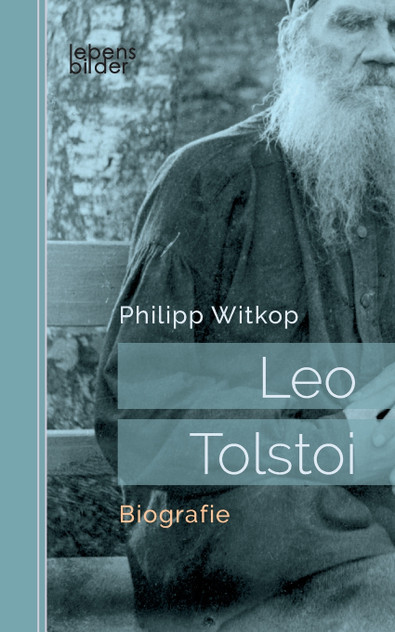
Das Werk Tolstois ist stark verbunden mit seiner Persönlichkeit und seinem Leben, stärker als bei vielen anderen großen Schriftstellern. In dieser frühen Biografie unternimmt es Philipp Witkop,...
This work has been selected by scholars as being culturally important, and is part of the knowledge base of civilization as we know it.This work is in the "public domain in the United States of...
"Never before had such a voice sounded in Europe ... It is little to say that we were thrown into raptures by the creative genius of Tolstoy. It became part of our life, became our very own," wrote...
Discover your next great read at BookLoop, Australiand online bookstore offering a vast selection of titles across various genres and interests. Whether you're curious about what's trending or searching for graphic novels that captivate, thrilling crime and mystery fiction, or exhilarating action and adventure stories, our curated collections have something for every reader. Delve into imaginative fantasy worlds or explore the realms of science fiction that challenge the boundaries of reality. Fans of contemporary narratives will find compelling stories in our contemporary fiction section. Embark on epic journeys with our fantasy and science fiction titles,
Shop Trending Books and New Releases
Explore our new releases for the most recent additions in romance books, fantasy books, graphic novels, crime and mystery books, science fiction books as well as biographies, cookbooks, self help books, tarot cards, fortunetelling and much more. With titles covering current trends, booktok and bookstagram recommendations, and emerging authors, BookLoop remains your go-to local australian bookstore for buying books online across all book genres.
Shop Best Books By Collection
Stay updated with the literary world by browsing our trending books, featuring the latest bestsellers and critically acclaimed works. Explore titles from popular brands like Minecraft, Pokemon, Star Wars, Bluey, Lonely Planet, ABIA award winners, Peppa Pig, and our specialised collection of ADHD books. At BookLoop, we are committed to providing a diverse and enriching reading experience for all.
Sign In
your cart
Your cart is empty
Menu
Search
PRE-SALES
If you have any questions before making a purchase chat with our online operators to get more information.