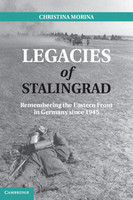

Christina Morina's book examines the history of the Eastern Front war and its impact on German politics and society throughout the postwar period. She argues that the memory of the Eastern Front war was one of the most crucial and contested themes in each part of the divided Germany. Although the Holocaust gained the most prominent position in West German memory, official memory in East Germany centered on the war against the USSR. The book analyzes the ways in which these memories emerged in postwar German political culture during and after the Cold War, and how views of these events played a role in contemporary political debates. The analysis pays close attention to the biographies of the protagonists both during the war and after, drawing distinctions between the accepted, public memory of events and individual encounters with the war.
From the windswept Ukrainian steppes to frigid Siberia, this convoluted love story boldly paints a dynamic masterpiece against the backdrop of the most dramatic event of WWII.
Victory at Stalingrad tells the gripping strategic and military story of that battle. The hard-won Soviet victory prevented Hitler from waging the Second World War for another ten years and set...
"Powerfully argued, and a compelling read, this work is a major contribution to our understanding of the end of white minority rule in South Africa." - Peter Vale. The apartheid security juggernaut...