
Trending Bestseller

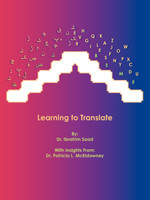
Learning to Translate

No reviews yet Write a Review
Paperback / softback
27 May 2008
$27.47
Ships in 3-5 business days
Hurry up! Current stock:
Much has been written elsewhere about the theory of translation. The focus here, however, is on a generalised linguistic description as the basis for understanding and learning to translate different types of text. A framework for analysing universal text types is provided through the medium of English. It is then shown how this analysis can be used as the basis for re-building the text in another language, in this case Arabic. Moreover, the analysis reveals core examples of each type of text type identified and shows how more and more sophisticated forms occur within the context of each. This obviously has implications for course design and a general path from core to more sophisticated is exemplified. It is implicit within this approach that the concern is with understanding and transferring the cohesion and coherence of text. The grammatical framework revealed by the textual analysis provides the context for dealing with discrete lexical items and collocations within. Though the languages exemplified here are English and Arabic it is believed that the process outlined has universal application. The main focus is on working with factual text types. Such text allows trainee translators to transfer information from one language to another with minimal loss or gain at the same time as they are able to improve their control of the languages involved. This foundation is then shown to be the spring-board for dealing with much more complex, creative text typical of the novel and short story, poetry and drama. By its very nature such text demands a much greater personal response on part of the translator. The book integrates theory and practice and, where appropriate, uses an interactive style which encourages active learning. Examples used in the explanations are followed by Try This tasks. These tasks provide the opportunity for the reader to work through similar examples in order to develop a deeper understanding of the principles being illustrated. To provide immediate feedback solutions are provided in the Key often together with some additional explanation.

You Can Find This Book In

    Book Details
    ISBN-13
    9781434356390
    Author
    Ibrahim Saad
    Publisher
    AuthorHouse UK
    Published
    27 May 2008
    Format
    Paperback / softback

    This product hasn't received any reviews yet. Be the first to review this product!

    $27.47
    Ships in 3-5 business days
    Hurry up! Current stock:

    Learning to Translate

    $27.47

    Description

    Much has been written elsewhere about the theory of translation. The focus here, however, is on a generalised linguistic description as the basis for understanding and learning to translate different types of text. A framework for analysing universal text types is provided through the medium of English. It is then shown how this analysis can be used as the basis for re-building the text in another language, in this case Arabic. Moreover, the analysis reveals core examples of each type of text type identified and shows how more and more sophisticated forms occur within the context of each. This obviously has implications for course design and a general path from core to more sophisticated is exemplified. It is implicit within this approach that the concern is with understanding and transferring the cohesion and coherence of text. The grammatical framework revealed by the textual analysis provides the context for dealing with discrete lexical items and collocations within. Though the languages exemplified here are English and Arabic it is believed that the process outlined has universal application. The main focus is on working with factual text types. Such text allows trainee translators to transfer information from one language to another with minimal loss or gain at the same time as they are able to improve their control of the languages involved. This foundation is then shown to be the spring-board for dealing with much more complex, creative text typical of the novel and short story, poetry and drama. By its very nature such text demands a much greater personal response on part of the translator. The book integrates theory and practice and, where appropriate, uses an interactive style which encourages active learning. Examples used in the explanations are followed by Try This tasks. These tasks provide the opportunity for the reader to work through similar examples in order to develop a deeper understanding of the principles being illustrated. To provide immediate feedback solutions are provided in the Key often together with some additional explanation.

    You Can Find This Book In

      This Book Is Categorised As