Research Paper (postgraduate) from the year 2011 in the subject Didactics for the subject English - Grammar, Style, Working Technique, , language: English, abstract: Background of the StudyIt is observed in the past years that some students tend to be intelligent in different ways. Intelligence has been defined and studied under a number of different rubrics, among them individual differences, cognitive abilities, and aptitudes. Probably the most influential developments in our recent understanding of these concepts have come from educational and psychological researchers associated with cognitive psychology. Three of those individuals, Robert Sternberg, Howard Gardner, and John Horn serve as a representative sample of researchers who have made significant gains in our current conceptions of intelligence.Robert Sternberg. Sternberg's (1985) theory of intelligence contains three sub theories, one about context, one about experience, and one about the cognitive components of information processing. The contextual sub theory attempts to specify what would be considered "intelligent" in a given culture or context. According to him, culturally intelligent behavior involves adapting to one's present environment, selecting a more optimal environment, or reshaping one's current environment. The experiential sub theory claims that the expression of any intelligent behavior will be a function of the amount of experience one has with the particular class of tasks being tested. According to Sternberg, intelligence is best demonstrated when the task is relatively novel or unfamiliar. The componential sub theory describes the cognitive structures and processes that together produce intelligent behavior. Sternberg proposes three general types of processes: met components, performance components, and knowledge acquisition components. As a whole, the diarchic theory claims different aspects or kinds of intelligence.Howard Gardner, one of the most popular recent views of intellige
Research Paper (postgraduate) from the year 2011 in the subject Didactics for the subject English - Grammar, Style, Working Technique, , language: English, abstract: Background of the StudyIt is observed in the past years that some students tend to be intelligent in different ways. Intelligence has been defined and studied under a number of different rubrics, among them individual differences, cognitive abilities, and aptitudes. Probably the most influential developments in our recent understanding of these concepts have come from educational and psychological researchers associated with cognitive psychology. Three of those individuals, Robert Sternberg, Howard Gardner, and John Horn serve as a representative sample of researchers who have made significant gains in our current conceptions of intelligence.Robert Sternberg. Sternberg's (1985) theory of intelligence contains three sub theories, one about context, one about experience, and one about the cognitive components of information processing. The contextual sub theory attempts to specify what would be considered "intelligent" in a given culture or context. According to him, culturally intelligent behavior involves adapting to one's present environment, selecting a more optimal environment, or reshaping one's current environment. The experiential sub theory claims that the expression of any intelligent behavior will be a function of the amount of experience one has with the particular class of tasks being tested. According to Sternberg, intelligence is best demonstrated when the task is relatively novel or unfamiliar. The componential sub theory describes the cognitive structures and processes that together produce intelligent behavior. Sternberg proposes three general types of processes: met components, performance components, and knowledge acquisition components. As a whole, the diarchic theory claims different aspects or kinds of intelligence.Howard Gardner, one of the most popular recent views of intellige
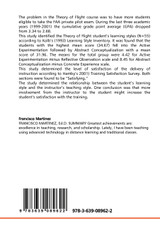
The problem in the Theory of Flight course was to have more students eligible to take the FAA private pilot exam. During the last three academic years (1999-2001) the cumulative grade point average...
While the creation and adoption of new technologies has increased in recent years, the educational sector often limits technology use. Despite this, many researchers are convinced of the vital role...
Discover your next great read at BookLoop, Australiand online bookstore offering a vast selection of titles across various genres and interests. Whether you're curious about what's trending or searching for graphic novels that captivate, thrilling crime and mystery fiction, or exhilarating action and adventure stories, our curated collections have something for every reader. Delve into imaginative fantasy worlds or explore the realms of science fiction that challenge the boundaries of reality. Fans of contemporary narratives will find compelling stories in our contemporary fiction section. Embark on epic journeys with our fantasy and science fiction titles,
Shop Trending Books and New Releases
Explore our new releases for the most recent additions in romance books, fantasy books, graphic novels, crime and mystery books, science fiction books as well as biographies, cookbooks, self help books, tarot cards, fortunetelling and much more. With titles covering current trends, booktok and bookstagram recommendations, and emerging authors, BookLoop remains your go-to local australian bookstore for buying books online across all book genres.
Shop Best Books By Collection
Stay updated with the literary world by browsing our trending books, featuring the latest bestsellers and critically acclaimed works. Explore titles from popular brands like Minecraft, Pokemon, Star Wars, Bluey, Lonely Planet, ABIA award winners, Peppa Pig, and our specialised collection of ADHD books. At BookLoop, we are committed to providing a diverse and enriching reading experience for all.
Sign In
your cart
Your cart is empty
Menu
Search
PRE-SALES
If you have any questions before making a purchase chat with our online operators to get more information.