The work will explore issues related to educational leadership in various settings in the 21st century. It willargue that the context for leadership within many nation states and international scenarios involvesinteraction between multiple and diverse social cultures. A further proposition is that the dominantleadership theory and discourse in the past reflects forms of western hegemony and mono-culturalassumptions drawn largely from the Anglo-American worldview. It will argue that such frameworks havelimited validity in multicultural societies such as Australia, Britain, Canada, Europe and the USA and withindigenous communities within such nations. These societies contain significant populations which do notshare the core values which inform established leadership practice and institutional paradigms in suchnations. The consequence can often be insensitivity towards non-mainstream cultures, inappropriatestructures, failed interventions and alienation of individuals from major institutions and traditions.Another proposition is that as more developing nations increase in affluence and view education as a keyeconomic strategy, they become increasingly exposed to western discourses about leadership andmanagement. Whilst acknowledging that western traditions have much to offer, there is a danger that thiscan involve forms of cultural imperialism whereby local traditions are ignored or subjugated. There is a need for developing nations to recognise andvalue the traditions and practices from their own cultures and assess the extent to which they are compatible with borrowings from other nations. Suchprocesses require a sophisticated degree of reflective analysis to determine potential compatibilities and conflicts. This is an alternative to unmediatedcultural borrowing, cloning, and hybridization. Western leadership scholars who work in such contexts have some responsibility to address thisinteraction instead of blithely offering practices and recipes from their metropolitan world views.The final proposition is that there is a need to develop models and practices for intercultural dynamics which are responsive to interculturalcomplexity. When these are thoroughly developed there will be clear implications for education.The unique features of this book include;• It introduces a new theoretical perspective on leadership and intercultural issues which builds upon the previous work ofcross-cultural theorists from previous decades in educational leadership discourse• It will explore the three primary contexts for leadership and intercultural interaction; with indigenous communities innation states, with multicultural communities in nation states and with international education and development programs• The book will draw upon a variety of authors from across the globe; fromAustralia, Britain, Canada, China, Fiji, Hong Kong, Mexico Sweden and theUnited States• The book will provide opportunities for the development of comparative andwide ranging perspectives within specific fields. For instance students will beable to compare issues related to indigenous education in New Zealand,Canada and Fiji. Multicultural perspectives can be informed by experiencesfrom Britain, Canada and the US. One of the strong chapters in the book is onA First Nation leadership program in the US. International programs can becompared from contexts as diverse as Bellarus, China and Pacific Islands.• As such the book will supplement and challenge the mono-cultural textswhich tend to dominate leadership preparation programs in both developedand developing nations.The intended audience for this book includes academics and students in the fields ofeducation, health, public administration and community development in both the developedand developing world. It will also appeal to practitioners in national state and local siteswho operate in intercultural contexts.
The work will explore issues related to educational leadership in various settings in the 21st century. It willargue that the context for leadership within many nation states and international scenarios involvesinteraction between multiple and diverse social cultures. A further proposition is that the dominantleadership theory and discourse in the past reflects forms of western hegemony and mono-culturalassumptions drawn largely from the Anglo-American worldview. It will argue that such frameworks havelimited validity in multicultural societies such as Australia, Britain, Canada, Europe and the USA and withindigenous communities within such nations. These societies contain significant populations which do notshare the core values which inform established leadership practice and institutional paradigms in suchnations. The consequence can often be insensitivity towards non-mainstream cultures, inappropriatestructures, failed interventions and alienation of individuals from major institutions and traditions.Another proposition is that as more developing nations increase in affluence and view education as a keyeconomic strategy, they become increasingly exposed to western discourses about leadership andmanagement. Whilst acknowledging that western traditions have much to offer, there is a danger that thiscan involve forms of cultural imperialism whereby local traditions are ignored or subjugated. There is a need for developing nations to recognise andvalue the traditions and practices from their own cultures and assess the extent to which they are compatible with borrowings from other nations. Suchprocesses require a sophisticated degree of reflective analysis to determine potential compatibilities and conflicts. This is an alternative to unmediatedcultural borrowing, cloning, and hybridization. Western leadership scholars who work in such contexts have some responsibility to address thisinteraction instead of blithely offering practices and recipes from their metropolitan world views.The final proposition is that there is a need to develop models and practices for intercultural dynamics which are responsive to interculturalcomplexity. When these are thoroughly developed there will be clear implications for education.The unique features of this book include;• It introduces a new theoretical perspective on leadership and intercultural issues which builds upon the previous work ofcross-cultural theorists from previous decades in educational leadership discourse• It will explore the three primary contexts for leadership and intercultural interaction; with indigenous communities innation states, with multicultural communities in nation states and with international education and development programs• The book will draw upon a variety of authors from across the globe; fromAustralia, Britain, Canada, China, Fiji, Hong Kong, Mexico Sweden and theUnited States• The book will provide opportunities for the development of comparative andwide ranging perspectives within specific fields. For instance students will beable to compare issues related to indigenous education in New Zealand,Canada and Fiji. Multicultural perspectives can be informed by experiencesfrom Britain, Canada and the US. One of the strong chapters in the book is onA First Nation leadership program in the US. International programs can becompared from contexts as diverse as Bellarus, China and Pacific Islands.• As such the book will supplement and challenge the mono-cultural textswhich tend to dominate leadership preparation programs in both developedand developing nations.The intended audience for this book includes academics and students in the fields ofeducation, health, public administration and community development in both the developedand developing world. It will also appeal to practitioners in national state and local siteswho operate in intercultural contexts.
argue that the context for leadership within many nation states and international scenarios involvesinteraction between multiple and diverse social cultures. A further proposition is that the...
Sustainable Leadership (SL) encompasses the broad roles and responsibilities of leadersthat cut across the whole organization and the entire extended enterprise from horizon tohorizon. The...
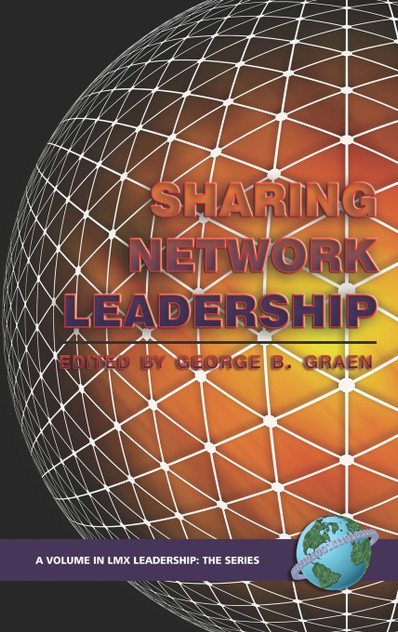
In this book, we elaborate on the dynamic process of leadership sharing in creative project networks by pointing out that the boundaries andrelationships of the networks change over time. As the...
Discover your next great read at BookLoop, Australiand online bookstore offering a vast selection of titles across various genres and interests. Whether you're curious about what's trending or searching for graphic novels that captivate, thrilling crime and mystery fiction, or exhilarating action and adventure stories, our curated collections have something for every reader. Delve into imaginative fantasy worlds or explore the realms of science fiction that challenge the boundaries of reality. Fans of contemporary narratives will find compelling stories in our contemporary fiction section. Embark on epic journeys with our fantasy and science fiction titles,
Shop Trending Books and New Releases
Explore our new releases for the most recent additions in romance books, fantasy books, graphic novels, crime and mystery books, science fiction books as well as biographies, cookbooks, self help books, tarot cards, fortunetelling and much more. With titles covering current trends, booktok and bookstagram recommendations, and emerging authors, BookLoop remains your go-to local australian bookstore for buying books online across all book genres.
Shop Best Books By Collection
Stay updated with the literary world by browsing our trending books, featuring the latest bestsellers and critically acclaimed works. Explore titles from popular brands like Minecraft, Pokemon, Star Wars, Bluey, Lonely Planet, ABIA award winners, Peppa Pig, and our specialised collection of ADHD books. At BookLoop, we are committed to providing a diverse and enriching reading experience for all.
Buy Educational Books and Textbooks Online at BookLoop
Shop School Textbooks for Primary, Secondary, and Higher Education
At BookLoop, we make it easy to buy school textbooks online in Australia for every stage of learning. Our extensive
textbook collection includes curriculum-aligned primary school books,
secondary school books, and resources for TAFE courses, vocational training, and university studies.
Each title is selected for accuracy, quality, and alignment with the Australian Curriculum, supporting teachers, students, and schools across the country. Whether you’re preparing for exams, classroom learning, or distance education, BookLoop’s range of educational books ensures your students have the right materials to succeed.
Teacher Resources, Classroom Tools and Professional Learning
Empower your teaching with teacher resources and classroom support materials from BookLoop.
Our collection includes lesson planning guides, literacy and numeracy workbooks, STEM education resources, and assessment tools that help educators deliver engaging, effective learning experiences.
We also stock a wide selection of preschool and early years education books tailored to early childhood development, classroom management, and student wellbeing.
Teachers can access everything from professional development books to interactive classroom activities — all carefully curated to enhance teaching outcomes and student success.
Educational Books and Learning Resources for Every Subject
Find educational books for students across a variety of subjects including English, Mathematics, Science, History, Geography, and the Arts.
BookLoop partners with trusted Australian publishers to provide up-to-date resources that meet classroom requirements and support independent learning.
Whether you’re a school administrator sourcing bulk textbook orders, a parent preparing for the new term, or a teacher updating your classroom library, BookLoop is your one-stop online bookstore for all education and teaching materials.
Sign In
your cart
Your cart is empty
Menu
Search
PRE-SALES
If you have any questions before making a purchase chat with our online operators to get more information.