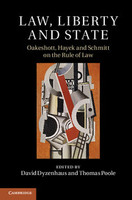
Oakeshott, Hayek and Schmitt are associated with a conservative reaction to the 'progressive' forces of the twentieth century. Each was an acute analyst of the juristic form of the modern state and the relationship of that form to the idea of liberty under a system of public, general law. Hayek had the highest regard for Schmitt's understanding of the rule of law state despite Schmitt's hostility to it, and he owed the distinction he drew in his own work between a purpose-governed form of state and a law-governed form to Oakeshott. However, the three have until now rarely been considered together, something which will be ever more apparent as political theorists, lawyers and theorists of international relations turn to the foundational texts of twentieth-century thought at a time when debate about liberal democratic theory might appear to have run out of steam.
Published in 1776, this book is a powerful denunciation of the institution of slavery by John Adams, a Founding Father and the second president of the United States. The book argues that slavery is...
This well-known libertarian classic clearly articulates the fundamental conflict between individual liberty and state power. It's a must-read for students of political philosophy and anyone...
George Lacy challenges the individualistic philosophy of Herbert Spencer and the political economists, arguing that true liberty requires a just and equitable social order. This book is a provocative...