
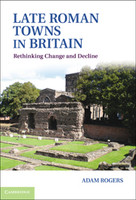
In this book, Adam Rogers examines the late Roman phases of towns in Britain. Critically analysing the archaeological notion of decline, he focuses on public buildings, which played an important role, administrative and symbolic, within urban complexes. Arguing against the interpretation that many of these monumental civic buildings were in decline or abandoned in the later Roman period, he demonstrates that they remained purposeful spaces and important centres of urban life. Through a detailed assessment of the archaeology of late Roman towns, this book argues that the archaeological framework of decline does not permit an adequate and comprehensive understanding of the towns during this period. Moving beyond the idea of decline, this book emphasises a longer-term perspective for understanding the importance of towns in the later Roman period.
This book examines and defines the functions of towns in Roman Britain and applies the definition so formed to Romano-British sites. It considers the towns' foundation, political status, development...
Town and Country in Roman Britain (1964) is a study of the effects of Roman rule on the lowland zone of Britain and of the relationship between town and country. It places the towns and villas in...