
Trending Bestseller

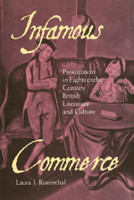
Infamous Commerce

No reviews yet Write a Review
Paperback / softback
288 Pages
$84.94
Ships in 3-5 business days
Hurry up! Current stock:

In Infamous Commerce, Laura J. Rosenthal uses literary and historical sources to explore the meaning of prostitution from the Restoration through the eighteenth century, showing how both reformers and libertines constructed the modern meaning of sex work during this period. From Grub Street's lurid "whore biographies" to the period's most acclaimed novels, the prostitute was depicted as facing a choice between abject poverty and some form of sex work. Prostitution, in Rosenthal's view, confronted the core controversies of eighteenth-century capitalism: luxury, desire, global trade, commodification, social mobility, gender identity, imperialism, self-ownership, alienation, and even the nature of work itself. In the context of extensive research into printed accounts of both male and female prostitution-among them sermons, popular prostitute biographies, satire, pornography, brothel guides, reformist writing, and travel narratives-Rosenthal offers in-depth readings of Samuel Richardson's Clarissa and Pamela and the responses to the latter novel (including Eliza Haywood's Anti-Pamela), Bernard Mandeville's defenses of prostitution, Daniel Defoe's Roxana, Henry Fielding's Tom Jones, and travel journals about the voyages of Captain Cook to the South Seas. Throughout, Rosenthal considers representations of the prostitute's own sexuality (desire, revulsion, etc.) to be key parts of the changing meaning of ""the oldest profession.""

"

Book details

ISBN-13
9780801456817
Author
Laura J. Rosenthal
Format
Paperback / softback
Pages
288

This product hasn't received any reviews yet. Be the first to review this product!

$84.94
Ships in 3-5 business days
Hurry up! Current stock:

Infamous Commerce

$84.94

Description

In Infamous Commerce, Laura J. Rosenthal uses literary and historical sources to explore the meaning of prostitution from the Restoration through the eighteenth century, showing how both reformers and libertines constructed the modern meaning of sex work during this period. From Grub Street's lurid "whore biographies" to the period's most acclaimed novels, the prostitute was depicted as facing a choice between abject poverty and some form of sex work. Prostitution, in Rosenthal's view, confronted the core controversies of eighteenth-century capitalism: luxury, desire, global trade, commodification, social mobility, gender identity, imperialism, self-ownership, alienation, and even the nature of work itself. In the context of extensive research into printed accounts of both male and female prostitution-among them sermons, popular prostitute biographies, satire, pornography, brothel guides, reformist writing, and travel narratives-Rosenthal offers in-depth readings of Samuel Richardson's Clarissa and Pamela and the responses to the latter novel (including Eliza Haywood's Anti-Pamela), Bernard Mandeville's defenses of prostitution, Daniel Defoe's Roxana, Henry Fielding's Tom Jones, and travel journals about the voyages of Captain Cook to the South Seas. Throughout, Rosenthal considers representations of the prostitute's own sexuality (desire, revulsion, etc.) to be key parts of the changing meaning of ""the oldest profession.""

"

Book details

ISBN-13
9780801456817
Author
Laura J. Rosenthal
Format
Paperback / softback
Pages
288