Trending Bestseller

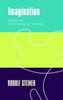
Imagination

Mary Warnock

No reviews yet Write a Review
Paperback / softback
24-October-1978
$75.00
Ships in 3-5 business days
Hurry up! Current stock:
Imagination is an outstanding contribution to a notoriously elusive and confusing subject. It skillfully interrelates problems in philosophy, the history of ideas and literary theory and criticism, tracing the evolution of the concept of imagination from Hume and Kant in the eighteenth century to Ryle, Sartre and Wittgenstein in the twentieth. She strongly belies that the cultivation of imagination should be the chief aim of education and one of her objectives in writing the book has been to put forward reasons why this is so. Purely philosophical treatment of the concept is shown to be related to its use in the work of Coleridge and Wordsworth, who she considers to be the creators of a new kind of awareness with more than literary implications. The purpose of her historical account is to suggest that the role of imagination in our perception and thought is more pervasive than may at first sight appear, and that the thread she traces is an important link joining apparently different areas of our experience. She argues that imagination is an essential element in both our awareness of the world and our attaching of value to it.

This product hasn't received any reviews yet. Be the first to review this product!

$75.00
Ships in 3-5 business days
Hurry up! Current stock:

Imagination

$75.00

Description

Imagination is an outstanding contribution to a notoriously elusive and confusing subject. It skillfully interrelates problems in philosophy, the history of ideas and literary theory and criticism, tracing the evolution of the concept of imagination from Hume and Kant in the eighteenth century to Ryle, Sartre and Wittgenstein in the twentieth. She strongly belies that the cultivation of imagination should be the chief aim of education and one of her objectives in writing the book has been to put forward reasons why this is so. Purely philosophical treatment of the concept is shown to be related to its use in the work of Coleridge and Wordsworth, who she considers to be the creators of a new kind of awareness with more than literary implications. The purpose of her historical account is to suggest that the role of imagination in our perception and thought is more pervasive than may at first sight appear, and that the thread she traces is an important link joining apparently different areas of our experience. She argues that imagination is an essential element in both our awareness of the world and our attaching of value to it.

Customers Also Viewed